 blog
Driving Lessons for Mature Age Learners: A Complete Guide
Table of Contents
- Why Mature Age Learners Choose Structured Driving Lessons
- How Many Driving Lessons for Adults: Finding Your Starting Point
- Driving Lessons for Nervous Drivers: Building Confidence and Control
- Refresher Driving Courses: Returning to the Road Safely
- What to Expect from Your Driving Instructor
- Customised Lesson Plans and Flexible Scheduling
- Preparing for Your Practical Driving Test
- Frequently Asked Questions
Last Updated: October 4, 2026
Why Mature Age Learners Choose Structured Driving Lessons
Driving lessons for mature age learners address unique challenges that differ significantly from teenage learner experiences. Mature age learners often face different pressures, different confidence levels, and different life circumstances than first-time teen drivers. But beyond these psychological factors, there are also physical and cognitive changes that affect driving ability, and a qualified instructor understands how to work with these realities rather than around them.
The Physical and Cognitive Factors That Matter
Driving safety depends on vision, reaction time, flexibility, and cognitive processing. These change over time, and ignoring these changes is where many mature learners struggle.
Reaction time naturally increases with age, but this doesn't mean you can't drive safely. It means you need to anticipate hazards earlier and maintain greater following distances. An instructor experienced with mature learners teaches hazard perception as a forward-thinking skill: spotting potential dangers 10-15 seconds ahead rather than reacting to immediate threats. This is actually safer driving than the reactive style many younger drivers learn.
Medication effects are rarely discussed but critically important. Common medications for blood pressure, diabetes, arthritis, or anxiety can affect alertness, coordination, or concentration. If you take regular medications, discuss them with your instructor and your doctor. Your instructor can help you identify which times of day you feel most alert and schedule lessons accordingly. Some mature learners find that morning lessons work better because medication effects are more predictable; others prefer afternoon slots.
Health Conditions and Adaptive Strategies
Arthritis, reduced flexibility, or previous injury don't disqualify you from driving, they require adaptive strategies. If arthritis limits your neck rotation, your instructor teaches you to use mirrors more effectively and position your body differently in the seat. If you have reduced grip strength, power steering and automatic transmission become practical considerations.
Hearing changes also affect driving safety, particularly your ability to hear emergency vehicle sirens or traffic sounds. If you have hearing loss, positioning yourself to see traffic more clearly (rather than relying on sound cues) becomes part of your strategy. A qualified instructor incorporates this into lesson planning without making you feel limited.
Why Structured Instruction Addresses These Factors
Structured driving lessons for mature age learners address specific needs that self-teaching or informal practice cannot. Many adults who attempt to learn without professional guidance find themselves repeating the same mistakes, building poor habits instead of safe ones. More importantly, they may not recognise how physical or cognitive changes are affecting their performance.
The real advantage of professional instruction isn't just about passing a test. It's about building genuine confidence and independence on the road in a way that's sustainable for your health and abilities. When you work with an instructor who understands the particular anxieties and physical realities mature learners face, the learning experience transforms from stressful or frustrating to manageable and empowering.
How Many Driving Lessons for Adults: Finding Your Starting Point
Most adults need between 20 and 40 hours of professional driving lessons to develop competency for independent driving, though this varies widely based on prior experience and individual learning pace. Someone returning to driving after 15 years may need more lessons than someone who learned as a teenager but took a break. The key is assessing where you actually are, not where you think you should be.
One common mistake is underestimating the hours needed. Adults sometimes assume their life experience and maturity mean they'll pick up driving skills quickly. The reality is that driving requires specific muscle memory, hazard perception, and vehicle control that take time to develop regardless of age.
The best approach is starting with a professional assessment. An experienced instructor can evaluate your current skills in the first lesson and give you a realistic estimate. From there, you can plan your lesson schedule around your work and personal commitments. Flexibility in scheduling matters enormously for working adults.
Driving Lessons for Nervous Drivers: Building Confidence and Control
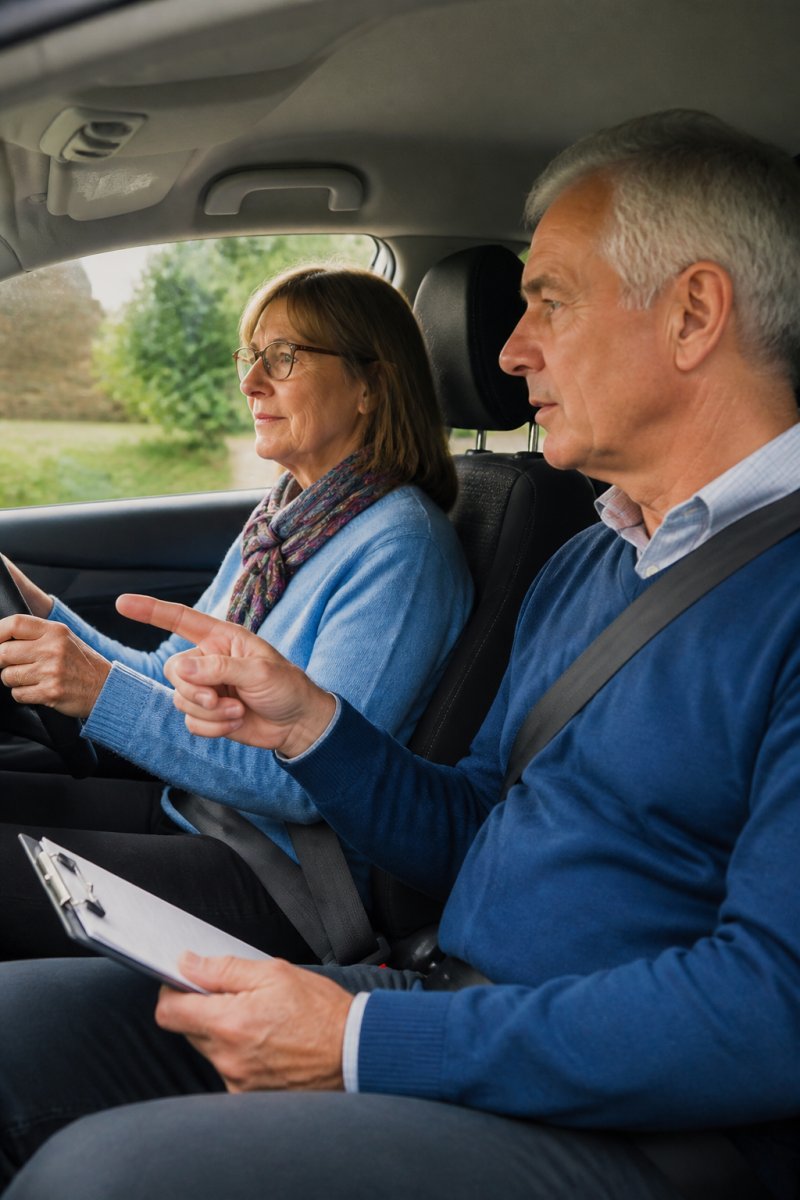
Anxiety behind the wheel is one of the most common barriers mature age learners face, and it's also one of the most misunderstood. Many nervous drivers have had experiences with impatient instructors or family members who made the learning process worse, not better. The frustration you feel isn't a personal failing, it's often the result of instruction that didn't match your learning style.
Working with an instructor who specialises in supporting anxious drivers changes everything. The right instructor recognises that nervousness is not a character flaw but a signal that you need a different approach. They slow down explanations, break skills into smaller steps, and create an environment where mistakes feel like learning opportunities rather than failures.
Confidence building happens gradually through repeated success in low-pressure situations. This is why lesson structure matters. An instructor trained in working with nervous drivers will start with quiet streets, build to busier roads only when you're ready, and always maintain control of the pace. You're not racing to prove anything, you're learning at the speed that actually works for your brain.
Refresher Driving Courses: Returning to the Road Safely
If you haven't driven in several years, a refresher course is far more valuable than jumping straight back into independent driving. Road rules change, traffic patterns evolve, and your own confidence needs rebuilding. A structured refresher program addresses all three.
Refresher courses for mature learners typically focus on reacquainting you with vehicle control, updating you on current road rules and traffic law changes, and rebuilding the hazard perception skills that fade with time away from driving. Many drivers are surprised how much has changed, new road markings, updated speed limit enforcement, different intersection layouts in their local area.
The psychological aspect matters too. Returning to driving after a long break can feel daunting. A refresher course with a patient instructor who understands that hesitation is normal helps you rebuild confidence systematically rather than through trial and error on busy roads.
What to Expect from Your Driving Instructor
A good driving instructor for mature learners combines technical knowledge with genuine patience and communication skill. You should expect someone who explains why you're doing something, not just what to do. An instructor who says "turn left here" without context teaches you to follow instructions. One who says "we're turning left because the right lane has parked cars ahead" teaches you to think like a safe driver.
The instructor should also adapt their teaching style to how you learn best. Some people learn through detailed verbal explanation. Others need to experience something first and then discuss it. A skilled instructor recognises these differences and adjusts accordingly.
Professionalism and punctuality matter. Your instructor should arrive on time, maintain the vehicle in safe condition, and treat your learning seriously. The vehicle itself should be well-maintained and equipped with dual controls so the instructor can intervene safely if needed.
Customised Lesson Plans and Flexible Scheduling
One reason many mature learners succeed with professional instruction is flexible scheduling that fits actual life. Working adults can't always do lessons during standard business hours. Flexible scheduling options are available to work for people with jobs, families, and other commitments.
A customised lesson plan means your instructor focuses on the skills you need to develop, not a one-size-fits-all curriculum. If you're confident with parking but anxious about motorway merging, your lessons emphasise motorway skills. If you struggled with a specific intersection in your local area, you practice that until it feels manageable.
This tailored approach saves time and money. You're not spending lesson hours on skills you've already mastered. You're building competency in areas where you actually need support.
Preparing for Your Practical Driving Test
When you're ready for your practical driving test, understanding exactly what the process involves removes much of the anxiety mature learners experience. The practical test is not a surprise, it follows a structured format that you can prepare for methodically.
Understanding the Test Structure
The practical driving test assesses both your vehicle control and your decision-making under real-world conditions. You'll be asked to demonstrate specific manoeuvres (such as reversing around a corner, parallel parking, or three-point turns), drive through various road types, and respond to examiner instructions in real time.
Before the test, you'll need to complete a vehicle check, the examiner will ask you to identify and explain basic controls and safety features. This isn't a mechanical knowledge test; it's confirming you understand how to operate the vehicle safely. Many mature learners worry unnecessarily about this section.
The Pre-Test Checklist
Book your practical test through your state's licensing authority. You'll need to provide your learner permit, proof of identity, and proof of address. Bring the same documents on test day. Arrive 10-15 minutes early; arriving flustered adds unnecessary stress.
The vehicle you test in must be roadworthy and registered. If you're using an instructor's dual-control vehicle, confirm in advance that it's booked for your test date. If you're using a private vehicle, ensure it has dual controls fitted and that the examiner can operate them safely.
Common Manoeuvres and How to Prepare
Your instructor should dedicate specific lessons to the manoeuvres examiners assess. Reversing around a corner, parallel parking, and three-point turns are standard across most states. Rather than practising these in random order, simulate test conditions: perform the manoeuvre once, then move on to another task (as you would during the actual test), then return to it later.
Many mature learners find that practising manoeuvres in the exact location where they'll be tested reduces anxiety. If your testing centre is known to use specific streets for reversing exercises, practise those streets. Familiarity breeds confidence.
Managing Test-Day Anxiety
Anxiety on test day is normal and doesn't mean you're unprepared. The difference between learners who pass and those who don't often comes down to how they manage nerves.
Your instructor should conduct at least one full mock test under realistic conditions in the weeks before your actual test. This means driving the test route, performing all manoeuvres in sequence, and having your instructor sit silently (as the examiner will) rather than offering guidance.
After You Pass: What's Next
Once you pass your practical test, you'll receive a pass certificate. Take this to your licensing authority to have your full licence issued. The process typically takes a few days to a few weeks depending on your state. In the meantime, you can drive independently (check your state's rules on this transition period).
If you don't pass on your first attempt, it's not a reflection of your ability to drive safely, many competent drivers need a second or third attempt. Your instructor can review the examiner's feedback, identify specific areas to strengthen, and help you prepare for your next test with a clearer focus.
Frequently Asked Questions
How many driving lessons do adults typically need before they're ready to drive independently?
The number varies significantly based on prior experience, confidence level, and learning pace. Adults returning to driving after a long break often need 10-20 refresher lessons, while those learning for the first time may require 20-40 lessons. Nervous drivers typically benefit from additional sessions focused on anxiety management and hazard perception. Your instructor will assess your competency and recommend a tailored plan rather than a fixed number.
Can driving lessons for nervous drivers actually help reduce anxiety behind the wheel?
Yes. Structured lessons with a patient, experienced instructor build confidence through gradual exposure to different road conditions and traffic scenarios. Nervous drivers benefit from instructors who understand anxiety triggers, teach defensive driving techniques, and allow time for questions and reassurance. Regular practice in a safe, controlled environment helps rewire automatic stress responses, making independent driving feel more manageable over time.
What's the difference between refresher driving courses and standard lessons for mature age learners?
Refresher courses target drivers returning after years away from the road. They focus on updating road rules, modern traffic patterns, vehicle technology, and rebuilding muscle memory for maneuvering and parking. Standard lessons for mature learners new to driving cover foundational skills. Refresher courses assume existing knowledge but address knowledge gaps and confidence gaps specific to re-entry drivers.
Is it too late to learn to drive as an older adult?
No. Many mature age learners successfully gain their licence and drive independently. Learning ability doesn't have a hard age cutoff. Mature learners often bring patience, discipline, and strong motivation to lessons. The key is finding an instructor experienced with adult learners who understands cognitive and physical considerations, uses clear communication, and provides the time and support needed for safe skill development.