 ultimate-guide
Build Driving Confidence: A 2026 Guide
Table of Contents
- Understanding Driving Anxiety and Building Confidence
- What Is Amaxophobia and How to Treat It
- Master the Fundamentals: Vehicle Familiarisation and Safety Checks
- Tips for Nervous Learner Drivers: Practical Confidence Strategies
- How to Practice Driving with a Nervous Learner
- Finding a Driving Instructor for Anxious Drivers
- Overcoming Specific Driving Challenges
- Technology and Tools to Support Confident Driving
- Frequently Asked Questions
Last Updated: October 2, 2026
Understanding Driving Anxiety and Building Confidence
Driving anxiety affects many learner drivers and even experienced drivers returning to the road after a long break, making it essential to build driving confidence through structured support. The fear of driving, whether it stems from past accidents, nervousness about traffic, or general lack of experience, is a real psychological challenge that requires a structured, patient approach to overcome.
Building driving confidence isn't about forcing yourself into situations that terrify you. It's about understanding what triggers your anxiety, developing practical coping strategies, and gradually expanding your comfort zone through deliberate practice. At Precision School of Driving, the most successful learners combine psychological techniques with hands-on vehicle familiarisation and consistent practice under supportive instruction.
The good news: driving anxiety is highly treatable. With the right approach, combining relaxation techniques, cognitive reframing, exposure therapy, and skilled instruction, most nervous drivers can build genuine, lasting confidence rather than simply white-knuckling through drives.
What Is Amaxophobia and How to Treat It
Amaxophobia is the clinical term for an intense, persistent fear of driving. Unlike normal nervousness, amaxophobia causes panic attacks, avoidance behaviour, and severe distress when behind the wheel or even thinking about driving. It's more common than many people realise, particularly among learner drivers and adults returning to driving after trauma or a long absence.
The condition develops from several sources: past accidents or near-misses, passenger anxiety that becomes internalised, perfectionism about passing the driving test, or general anxiety that intensifies in the high-stakes environment of traffic. Some drivers develop it after a specific incident; others report it's always been present.
Treatment for amaxophobia combines three approaches. First, exposure therapy: gradually facing driving situations in a controlled, supportive environment rather than avoiding them entirely. Second, cognitive behavioural techniques: identifying and challenging catastrophic thinking patterns ("I will crash," "I can't handle motorway traffic"). Third, practical skill-building: mastering vehicle controls and road safety so confidence is grounded in genuine competence, not false reassurance.
Professional driving instruction tailored to anxious drivers accelerates recovery. A patient instructor who understands the psychological side of driving anxiety, not just the mechanical skills, can create an environment where nervous drivers feel safe enough to learn effectively.
Master the Fundamentals: Vehicle Familiarisation and Safety Checks
Understanding Vehicle Controls and Features
Before you drive anywhere, you need to know your vehicle inside out. A nervous driver who doesn't understand what the pedals do, how to adjust mirrors, or what warning lights mean will feel helpless and anxious behind the wheel. Familiarity breeds confidence.
Spend time in a parked car getting to know every control: where the handbrake sits, how the steering feels at different angles, which pedal is the brake and which is the accelerator, how the gears shift. Understand what the dashboard lights mean. Know where the windscreen wipers, headlights, and indicators are. This isn't wasted time, it's foundational.
When you move to actually driving, you'll already know where everything is without thinking. Your hands will find the controls automatically. That frees up your mental capacity to focus on the road, other vehicles, and hazard perception rather than fumbling for switches while trying to steer.
Pre-Drive Vehicle Maintenance and Safety Checks
A well-maintained vehicle is safer and more predictable. Before every drive, perform basic safety checks: tyre pressure and tread depth, brake fluid level, windscreen washer fluid, and that all lights work. Check your mirrors are clean and properly adjusted.
These checks serve two purposes. Practically, they catch mechanical problems before they become dangerous. Psychologically, they give you control and confidence. You know the vehicle is roadworthy. You've inspected it yourself. That sense of control reduces anxiety significantly.
Tips for Nervous Learner Drivers: Practical Confidence Strategies
Deep Breathing and Relaxation Techniques
Panic attacks and acute anxiety spike your heart rate, shallow your breathing, and flood your system with stress hormones. You can't think clearly or react safely when you're in that state. Deep breathing interrupts the panic cycle immediately.
The simplest technique: breathe in through your nose for a count of four, hold for four, exhale through your mouth for four. Do this five to ten times before driving, or whenever you feel anxiety rising. It sounds basic, but it works because it physically lowers your heart rate and signals to your nervous system that you're safe.
Progressive muscle relaxation also helps. Before driving, systematically tense and release each muscle group: clench your fists for five seconds, release; tense your shoulders, release; tighten your legs, release.
Route Planning and Gradual Exposure to New Environments
Don't jump from quiet residential streets to peak-hour motorway traffic. That's exposure therapy done wrong, it overwhelms your system and reinforces fear.
Cognitive Reframing and Mindfulness for Calm Driving
Nervous drivers often catastrophise: "That car is too close, I'm going to crash." "I can't handle this traffic." "Everyone is judging my driving." These thoughts are automatic, but they're not facts.
How to Practice Driving with a Nervous Learner
The Role of Regular Practice and Consistency
Confidence builds through repetition in safe conditions, and this consistent practice is how you build driving confidence that lasts. One lesson per week won't build lasting confidence. Your nervous system needs regular exposure to driving situations so they become familiar rather than novel and frightening.

Driving with a Calm Passenger or Instructor
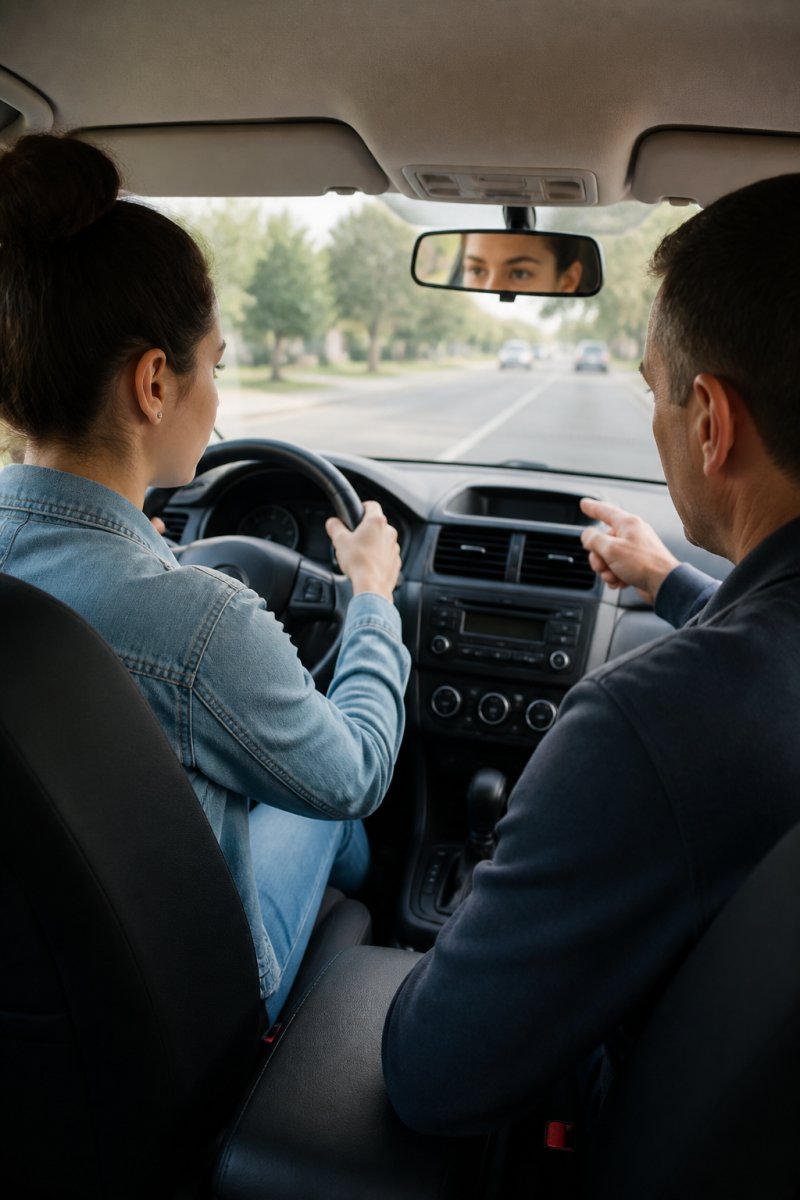
Who sits beside you matters enormously. An anxious passenger, gripping the dashboard, gasping at every turn, offering unsolicited criticism, will amplify your own anxiety. A calm, confident passenger or professional instructor does the opposite.
Finding a Driving Instructor for Anxious Drivers
Not all driving instructors are equipped to work effectively with nervous drivers. Some lack patience; others don't understand the psychology of driving anxiety and treat it as a character flaw rather than a legitimate challenge.
Overcoming Specific Driving Challenges
Building Confidence on Busy Roads and Motorways
Busy roads and motorways trigger intense anxiety in many nervous drivers because they involve speed, heavy traffic, and less time to react. The key is gradual exposure combined with specific skill-building.
Night Driving and Weather-Specific Confidence
Night driving and poor weather reduce visibility and increase perceived risk. Nervous drivers often avoid these conditions entirely, which means they never build confidence in them.
Post-Accident Trauma Recovery
If your driving anxiety stems from an accident or near-miss, you may experience trauma responses: flashbacks, panic when approaching the accident location, or hypervigilance on the road. This is a legitimate psychological injury, not weakness.
Technology and Tools to Support Confident Driving
Modern vehicles include technologies that reduce risk and can ease anxiety: automatic emergency braking, lane-keeping assist, blind-spot warnings, and reversing cameras. These aren't substitutes for good driving skills, but they do provide a safety net that some nervous drivers find reassuring.
Frequently Asked Questions
What is amaxophobia and how can it be treated?
Amaxophobia is an intense fear of driving that goes beyond normal nervousness. It can be treated through gradual exposure to driving situations, cognitive behavioural therapy techniques, relaxation exercises like deep breathing, and working with a patient, experienced driving instructor. Professional support combined with consistent practice in low-stress environments helps drivers gradually build confidence and reduce anxiety responses.
How long does it take to build driving confidence?
Building driving confidence varies for each person. Some nervous drivers see improvement within weeks of consistent practice, while others need several months. The key is regular exposure to different driving environments, working with a supportive instructor, and practising the techniques that work best for you. Setting small, achievable goals and celebrating progress helps maintain momentum throughout your confidence-building journey.
What breathing techniques help manage anxiety while driving?
Box breathing is highly effective: breathe in for four counts, hold for four, exhale for four, and hold for four. This activates your parasympathetic nervous system and reduces panic responses. Practise this technique before driving and during moments of stress on the road. Paired with mindfulness, focusing on the present moment rather than worrying about what might happen, these techniques help keep you calm and focused on the task ahead.
Can I build driving confidence if I'm neurodivergent or have ADHD?
Yes, absolutely. Many neurodivergent drivers build strong confidence with the right support. Working with an instructor experienced in neurodivergent learning needs is crucial, they can explain concepts in your preferred way, break down complex tasks into smaller steps, and adapt their teaching style to suit you. Structured practice routines and clear, consistent feedback help you develop the spatial awareness, hazard perception, and decision-making skills needed for safe, independent driving.
What should I do if I've had a driving accident and now feel anxious?
Post-accident anxiety is common and treatable. Start by working with a trauma-informed driving instructor who understands the psychological impact of accidents. Gradually reintroduce yourself to driving in safe, familiar environments before progressing to busier roads. Cognitive reframing, challenging catastrophic thoughts and replacing them with realistic assessments, helps rebuild trust in your abilities. Consider professional counselling if anxiety significantly impacts your daily life.
How can I practise driving with a nervous learner without making them more anxious?
Keep practice sessions short and positive, starting in quiet, low-traffic areas. Provide clear, calm instructions and praise effort and improvement. Avoid criticism or frustration, your own calm demeanour directly influences their anxiety levels. Plan routes in advance so the learner knows what to expect. Regular, consistent practice builds familiarity and confidence. Allow breaks when needed and celebrate small wins to maintain motivation and reduce stress.
Are there technological aids that help nervous drivers build confidence?
Yes, several tools support anxious drivers. Dashcams provide a record of your driving, reducing worry about making mistakes. Lane-keeping assistance and adaptive cruise control reduce the mental load on busy roads. Sat-nav systems with clear, advance route guidance reduce navigation anxiety. Some vehicles include blind-spot monitoring and parking sensors, which help drivers feel more aware of their surroundings. Familiarising yourself with these features builds confidence in your vehicle's capabilities.