 Ultimate guide
What to Look for in Driving Schools: A Practical Guide
Last Updated: November 7, 2026
Quick Summary
The most important things to look for in driving schools are accredited instructors with verifiable credentials, a teaching approach that suits your learner, a serviced training vehicle with dual controls, and a clear, written breakdown of total cost. Judge a school on evidence from a trial lesson rather than on its marketing.
- Ask to see the instructor's current licence and accreditation paperwork, not just a verbal assurance.
- Judge teaching quality by a trial lesson, looking for specific feedback and a calm response to mistakes.
- Compare packages by total cost to reach test readiness, not by the headline hourly rate.
- Confirm the training vehicle is regularly serviced and has dual controls for the instructor.
- Ask for a single main instructor and a written plan for cover if they are unavailable.
Table of Contents
- Instructor Accreditation, Experience and Licensing
- How to Choose a Driving Instructor Who Suits Your Learner
- Training Vehicles, Dual Controls and Transmission Options
- Lesson Structure, Pricing and the Total Cost of Learning
- How Many Driving Lessons You Are Likely to Need
- A Driving School Comparison Checklist and Trial Lesson Scorecard
- Booking Your First Lesson With Precision School of Driving
- Frequently Asked Questions
Choosing one of the many driving schools available is one of the first big decisions a new learner makes, and it shapes far more than the test result. The right school builds confidence, habits and road sense that last for decades. The wrong one can leave a nervous learner worse off than when they started.
Before you compare anything, it helps to know what you are looking for. Driving schools differ in instructor quality, vehicle standards, lesson structure and price, and the marketing on a homepage rarely shows those differences clearly.
Research into driver education is still developing. A 2024 review of driver education and training promising practices notes that simulation-based training should be vetted by subject-matter experts in driving simulation and young-driver research, which is a reminder that teaching methods matter as much as hours logged. Driver Education and Training Promising Practices report
Think about who will be in the passenger seat. Teenagers, parents, adult returners and neurodivergent learners all need different things from an instructor. A calm, structured approach suits one person; a faster pace with more road exposure may suit another. Our guide How to Pass Your Driving Test: A Complete Guide explains what the test requires once you are ready.
Instructor Accreditation, Experience and Licensing
Start by confirming the instructor holds a current driver's licence and the accreditation required to teach in your state. Ask to see the paperwork rather than relying on a verbal assurance. Qualified instructors can explain their credentials clearly, and a school that hesitates on this point is a warning sign.
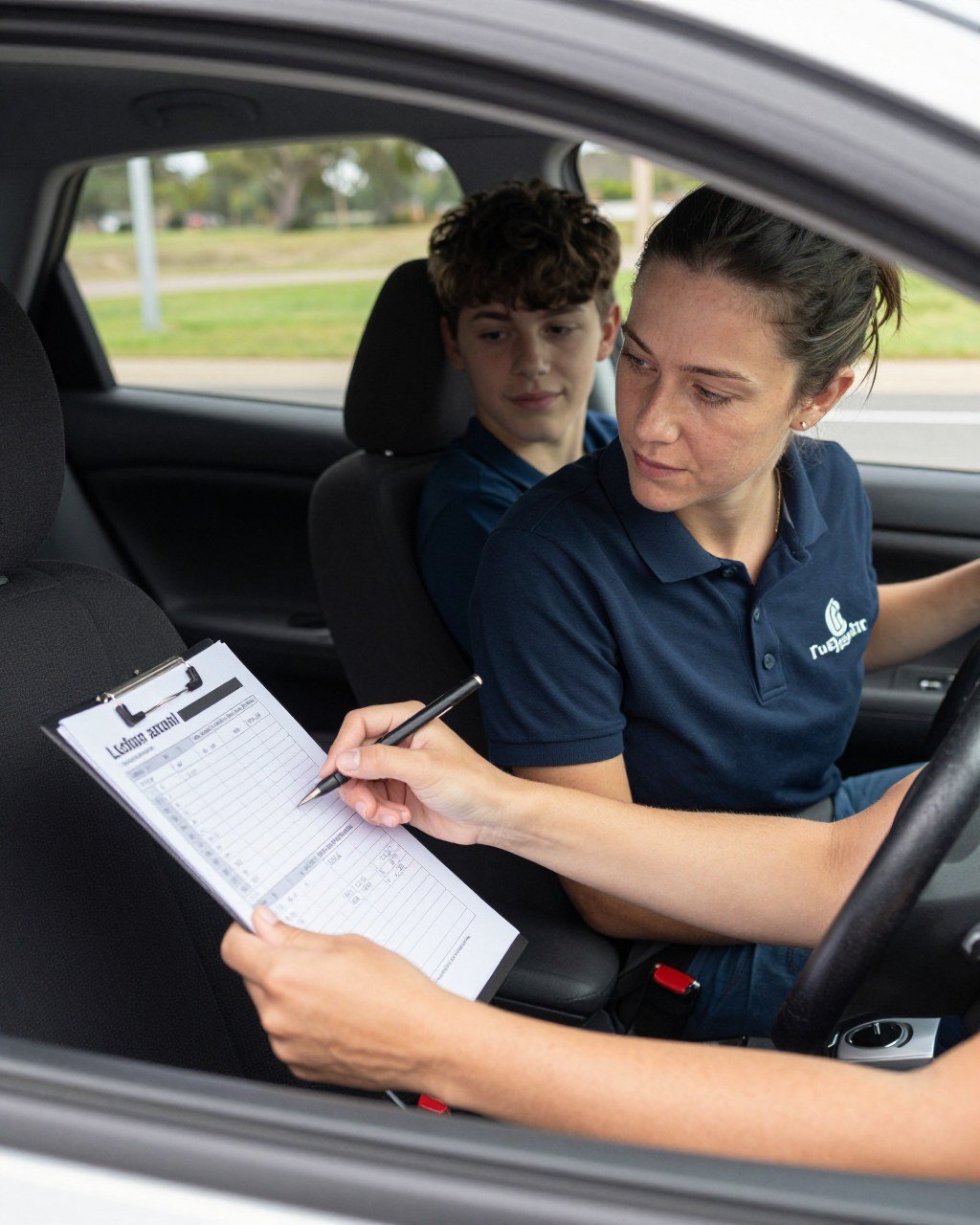
Experience matters, but years on the job tell you less than how those years were spent. Ask how many learners an instructor has taken to test, and what they do when a learner is struggling. An experienced instructor should be able to describe how they adjust a lesson for a learner who freezes at roundabouts or overthinks every gear change.
A useful question to put to any school is how instructors handle a learner who has had a bad experience before. Anxious learners often need a different pace, and the instructor's answer will show whether they have a method or just a personality.
How to Choose a Driving Instructor Who Suits Your Learner
The best instructor for one learner may be the wrong one for another. A patient, quiet teacher can help a nervous adult rebuild confidence, while a teenager who wants to get on with it may respond better to direct, brisk feedback. See how customised lesson plans are tailored to each learner before you choose. Ask for a short introductory conversation before booking, and pay attention to how the instructor listens to your questions.
If you are looking for how to choose a driving instructor, use a trial lesson as your main test, and judge teaching quality by what you observe rather than what the school claims. A useful trial lesson has a clear structure: the instructor explains what the lesson will cover, demonstrates or talks through a manoeuvre before asking the learner to attempt it, gives feedback that is specific rather than vague, and ends with a plan for the next lesson.
Specific feedback sounds like 'ease off the accelerator earlier before the roundabout' rather than 'you need to be smoother'. A good instructor breaks a manoeuvre into small steps and repeats the step that went wrong rather than moving on. Watch how they respond to a mistake: a calm correction and a second attempt is a good sign; raised voices or vague frustration are not.
Patience, Communication and Support for Nervous Learners
Nervous learners need instructors who communicate clearly and do not raise their voice when mistakes happen. Ask how the instructor responds to anxiety, and whether they can break a manoeuvre into small steps. A good instructor will tell the learner what to expect before a difficult road, not during it.
Support also means knowing when to stop. An instructor who ends a lesson early after a learner becomes overwhelmed is making a sound decision, not a failure. Ask whether the school has experience with neurodivergent learners, adults returning to driving after a long break, and learners who need instructions in plain language or at a slower pace.
Consistency With the Same Instructor
Learning to drive builds on what came before, so switching instructors often means repeating ground already covered. Ask whether you will be assigned one main instructor, and what happens if they are unavailable. Continuity usually produces steadier progress and a clearer picture of where the learner stands. Ask how the school records progress between lessons, and whether you will receive written feedback after each lesson so a relief instructor can pick up where the last one left off.
Training Vehicles, Dual Controls and Transmission Options
Check that the training vehicle is regularly serviced and clearly roadworthy. Ask the school for its maintenance practice and whether the car has dual controls, which allow the instructor to brake if needed.
Transmission matters too. Learners often start in a manual or an automatic, and the licence they hold determines what they can drive on test day. Confirm the school can teach the transmission you need, and whether it offers both if you are still deciding.
Lesson Structure, Pricing and the Total Cost of Learning
Lesson prices vary widely, and the headline hourly rate is the least useful number on a driving school's website. Read a transparent breakdown of why lessons are priced the way they are before comparing quotes.
Ask what each lesson fee includes before comparing anything else. Confirm whether pickup and drop-off are covered, and whether there is a separate charge for test-day vehicle use. Ask for the cancellation and refund policy in writing, including the notice period and any late-cancellation charges.
Compare packages by total cost to reach test readiness, not by the price of a single hour. Ask what happens to unused hours in any package before you buy.
Pricing for Precision School of Driving depends on lesson length, package and availability, so please contact the team or check the website for current rates and a quote.
Watch out: a low hourly rate can cost more overall if the learner needs extra lessons to reach test standard. Ask how many hours learners in a similar position usually need, and whether the school will put a realistic estimate in writing before you commit.
The table below compares the cost factors the article highlights, so you can weigh the total cost of learning rather than the headline rate.
| Cost factor | What to check | Why it matters |
|---|---|---|
| Hourly rate | Headline price only | Least useful number on its own |
| Total cost to test readiness | Lesson hours needed overall | Can outweigh a low hourly rate |
| Package terms | What happens to unused hours | Affects real value of a package |
| Pickup and drop-off | Whether it is included | May add to each lesson's cost |
| Test-day vehicle use | Separate charge or not | An extra cost to confirm upfront |
| Cancellation policy | Notice period and late fees | Protects you from unexpected charges |
How Many Driving Lessons You Are Likely to Need
The number of lessons depends on the learner, their confidence and how much practice they get between lessons. Some learners need a modest number of hours; others need considerably more, particularly those who are nervous or learning later in life. Ask the school for a realistic estimate based on your learner's starting point rather than a guaranteed figure.
Progress is easier to judge when the instructor tracks it. Ask how readiness is measured, and whether you will receive feedback after each lesson. Clear milestones make it obvious when a learner is ready for a practice test and when more work is needed.
A Driving School Comparison Checklist and Trial Lesson Scorecard
Use this checklist to compare schools side by side:
- Instructor holds a current licence and accreditation, and will show proof
- Clear answer on how the instructor supports anxious or neurodivergent learners
- Training vehicle is serviced, has dual controls, and suits the transmission you need
- One main instructor is assigned, with a plan for cover
- Lesson price, package details and cancellation policy are in writing
- Progress and test readiness are tracked and shared with the learner
- Reviews checked for patterns, not single standout comments
Score each school from 1 to 5 on the points above, and use the same scorecard after a trial lesson. A school that scores well on paper but poorly in the car is not the right fit.
For a trial lesson, judge teaching quality by what you observe: clear instructions, specific feedback, a calm response to mistakes, and a plan for the next lesson. Be cautious with online reviews, and look for complaints about specific, verifiable issues rather than one-off frustrations.
Booking Your First Lesson With Precision School of Driving
If you are weighing up options in the Adelaide Hills, Precision School of Driving offers calm, personalised lessons for teenagers, parents, adult returners and neurodivergent learners, with flexible scheduling. Use the checklist above on any school you consider, including ours, and book a trial lesson to see the fit for yourself. Ask about current pricing and availability when you enquire.
Ready to start with a calm, structured approach? Book your first lesson with Precision School of Driving and build the confidence to drive independently.
Frequently Asked Questions
What should I look for when choosing a driving school?
Start with the instructor. Check that they hold a current instructor accreditation, ask how long they have been teaching, and find out whether they are the same person each lesson. Then look at the training vehicle, including dual controls and whether it is manual, automatic or both. Ask how lessons are structured, what is included in the price and how cancellations are handled. A short trial lesson is the best way to judge teaching style and whether you feel comfortable with the instructor before committing to a lesson package.
How do I know if a driving instructor is qualified?
Ask to see their current licence and accreditation, and check that the accreditation is current rather than expired. Ask how long they have taught and whether they have experience with learners of your age and confidence level. Reputable schools will answer these questions openly. You can also look for independent reviews and check whether complaints have been raised, but read them critically and look for patterns rather than single comments.
How much do driving lessons cost?
Pricing depends on the lesson length, the package size, the vehicle type and the location, so there is no single fixed rate across providers. For current Precision School of Driving prices and package options, please visit our website or request a quote directly. When comparing schools, check whether the quoted price includes test preparation, pickup, and any fees for rescheduled or cancelled lessons, so you are comparing the total cost of learning rather than just the hourly rate.
How many driving lessons do learner drivers usually need?
The number of lessons varies widely because every learner progresses at a different pace. Factors include prior experience, confidence, how often lessons happen and whether practice is done between sessions. Rather than aiming for a fixed number, focus on readiness: can the learner handle busy intersections, multi-lane roads and changing conditions with minimal prompting? A good instructor will track progress against these skills and tell you honestly when a learner is ready for their test.
Can I choose a driving instructor who specialises in nervous drivers?
Yes, and it is worth asking directly. When you contact a school, describe your anxiety or your specific needs and ask how the instructor adapts lessons. Good answers include starting in quiet areas, breaking skills into small steps, agreeing on clear signals if you want to pause, and keeping a calm, unhurried pace. Some learners also benefit from a trial lesson to see whether the instructor's communication style suits them.