 Ultimate guide
How to Pass Your Driving Test: A Complete Guide
Table of Contents
- Understand the Test Structure and What Examiners Look For
- How Many Driving Lessons Before a Driving Test
- Master Road Rules and Traffic Signs
- Common Driving Test Mistakes and How to Avoid Them
- Essential Driving Test Checklist Before You Sit the Exam
- How to Stay Calm During a Driving Test
- Your Test Day Walkthrough and What to Expect
- Frequently Asked Questions
Last Updated: October 7, 2026
Understand the Test Structure and What Examiners Look For
To pass driving test, you need to understand it isn't a trick. Examiners assess whether you can operate a vehicle safely in real-world conditions, looking for consistent observation, smooth vehicle control, and the ability to follow instructions calmly under pressure.
The test typically runs 35-45 minutes and covers three core areas: a vehicle safety check, driving on a mix of road types, and manoeuvres such as reverse parking, a three-point turn, or a hill start.
What most learner drivers miss is how errors are actually treated. Assessment sheets generally sort errors into two tiers:
- Minor errors are small lapses that don't create an unsafe situation, such as a single missed mirror check or a slightly wide turn. A handful of these on their own won't fail you, but they accumulate, and a repeated pattern in the same category signals a skill gap.
- Critical errors are lapses that create an unsafe situation or breach a road rule, such as failing to give way, rolling through a stop sign, mounting a kerb, or failing to check a blind spot before changing lanes. A single critical error can end the test.
Some behaviours are treated as immediate fail items regardless of how well the rest of the drive went. These commonly include:
- Disobeying a traffic signal, stop sign, or give-way rule
- Exceeding the speed limit
- Failing to give way to a pedestrian
- Colliding with or mounting a kerb or traffic island
- Driving in a manner that requires the examiner to intervene (for example, grabbing the wheel or braking)
- Refusing to attempt a requested manoeuvre
Because scoring is cumulative, eliminate critical errors first, then reduce minor errors through repetition.
The examiner will also conduct a safety check before you start, asking you to identify and explain basic vehicle functions such as indicators, headlights, high beams, hazard lights, wipers, and the handbrake.
If you want the authoritative version of the scoring rules for your situation, check your state or territory licensing authority's current learner handbook and the assessment sheet they publish. These documents list the critical and immediate-fail items verbatim, and they are the same criteria your examiner will apply.
How Many Driving Lessons Before a Driving Test
There's no magic number, but most learners benefit from 40-120 hours of structured practice before attempting a driving test, depending on your starting point, how frequently you practise, and the quality of instruction you receive.
A learner with weekly lessons from an experienced instructor who practises between lessons progresses faster than someone with sporadic lessons and no independent practice. Consistency matters more than total hours.
Many learners feel unprepared after 80-100 hours because they've learned in isolation without clear benchmarks. The key is knowing where you actually stand.
One common mistake is believing more hours automatically mean better results.
Before booking your test, ask yourself: Can you drive confidently in heavy traffic? Can you perform all required manoeuvres without coaching? Can you handle unexpected situations (a car pulling out, pedestrians crossing, weather changes) without panic?
Master Road Rules and Traffic Signs
Safe driving starts with knowing the rules. You'll be tested on Australian road rules, speed limits, right-of-way situations, and traffic sign meanings.
Traffic signs fall into a few clear categories: warning signs (yellow diamonds warning of hazards), regulatory signs (red circles or rectangles telling you what you must or must not do), and information signs (blue or green directing you).
Road rules exist for a reason, and the examiner assesses whether you understand it. Checking your mirrors before changing lanes isn't box-ticking; it's a safety habit that prevents collisions. When you understand why a rule exists, you'll follow it consistently.
Common rule gaps include: when you can and cannot turn right on red, the correct distance to maintain from other vehicles, how to handle roundabouts safely, and when you must give way.
Common Driving Test Mistakes and How to Avoid Them
Most test failures come from a handful of repeated errors rather than isolated mistakes. Knowing these patterns lets you guard against them.
Rushing and failing to observe. Learners often accelerate too quickly or change direction without fully checking mirrors and blind spots.
Hesitation and indecision. Sitting at a green light too long, creeping slowly, or stopping when you should proceed signals uncertainty. Hesitation creates unsafe situations. Once you've checked it's safe, commit to your action.
Poor positioning. Drifting between lanes, sitting too close to the kerb, or positioning yourself incorrectly for turns tells the examiner you're not in control. Use lane markings and road edges as guides.
Forgetting manoeuvre steps. Reverse parking, three-point turns, and hill starts have specific sequences. Missing a step (like the handbrake on a hill start) is an automatic failure.
Panic under pressure. The moment you feel anxious, your driving deteriorates: you grip the wheel tighter, your observations narrow, and you make mistakes you wouldn't normally make. Staying calm is as important as steering.
Essential Driving Test Checklist Before You Sit the Exam
Use this checklist in the week before your test to confirm you're genuinely ready:
| Skill | Status | Notes |
|---|---|---|
| Vehicle safety check (lights, wipers, mirrors, seat) | [ ] | Can you explain each control? |
| Observation routine (mirrors, head checks, blind spots) | [ ] | Do you do this automatically every time? |
| Road rules and sign recognition | [ ] | Can you explain the logic behind each rule? |
| Smooth acceleration and braking | [ ] | No jerking or harsh movements? |
| Reverse parking | [ ] | Can you do it consistently without coaching? |
| Three-point turn | [ ] | Smooth, controlled, correct positioning? |
| Roundabout navigation | [ ] | Confident entry, observation, exit? |
| Hill start (if applicable) | [ ] | Handbrake, clutch control, smooth movement? |
| Lane changes | [ ] | Full observation sequence every time? |
| Stopping at stop signs | [ ] | Complete stop, not rolling? |
| Staying calm under pressure | [ ] | Can you manage anxiety without it affecting your driving? |
Print this checklist and work through it with your instructor. Tick each item only when you can do it consistently, not just once.
How to Stay Calm During a Driving Test
Anxiety is the silent killer of driving tests.
Start preparing mentally weeks before the test. Visualisation works: spend five minutes each evening imagining yourself driving calmly, handling a tricky situation, and finishing successfully.
The night before, prioritise sleep over last-minute cramming. A well-rested brain handles stress better. Eat a proper breakfast on test day, low blood sugar amplifies anxiety.
During the test, use breathing techniques. When you feel anxiety rising, take slow, deliberate breaths: in for four counts, hold for four, out for four.
Remember the examiner isn't your enemy; they want you to pass and are assessing your safety, not judging your worth.
At Precision School of Driving, we work specifically with nervous and anxious drivers because calm confidence is learnable.
Your Test Day Walkthrough and What to Expect
Here is the full test sequence, from booking to result, so nothing on the day catches you off guard.
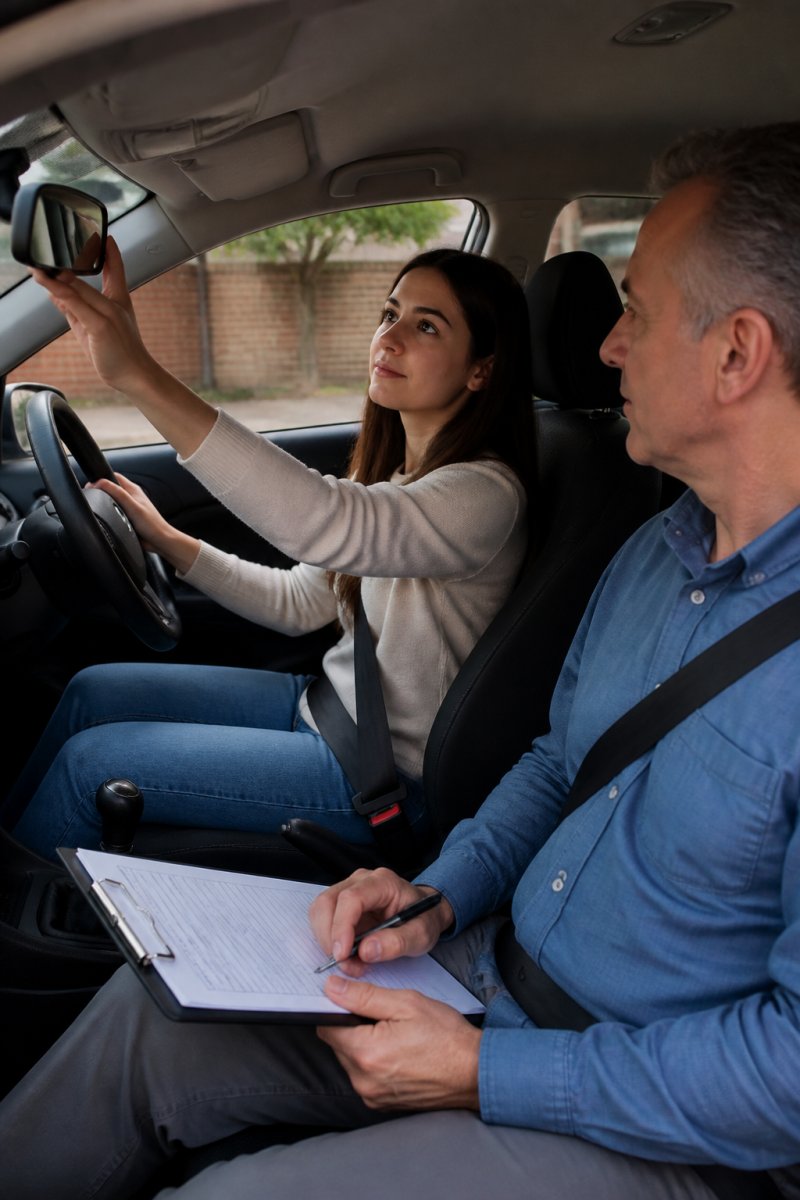
Before the day: booking and documents. Book through your state or territory licensing authority online or by phone.
Arrival. Arrive 10-15 minutes early, allowing extra time for parking and check-in. Present your documents at the counter; staff will confirm your booking and may inspect the vehicle.
Meeting the examiner. The examiner will introduce themselves, explain the test briefly, and ask you to perform the safety check.
The drive. Start the engine and drive.
The manoeuvre. Midway through, you'll perform one or more manoeuvres: reverse parking, a three-point turn, or a hill start, depending on the route and jurisdiction.
Return and result. Near the end, you'll return to the test centre or starting point.
If something is different from practice. Test vehicles, routes, and conditions vary. If the car is unfamiliar, take a minute to locate the controls before starting. If traffic or weather is worse than you practised in, drive to the conditions rather than your usual speed; the examiner assesses safety, not speed. If you have a diagnosed condition, a language need, or require an interpreter or other accommodation, contact your licensing authority well before the test date; most can arrange adjustments with notice.
Frequently Asked Questions
What is the most common reason people fail a driving test?
Observation failures are the leading cause of test failure. This includes not checking mirrors, missing blind spots, or failing to observe pedestrians and cyclists. Examiners prioritise safety awareness above all else. Other frequent failures involve incorrect signalling, poor vehicle control during manoeuvres, and not coming to complete stops. Practising observation checks, mirror, shoulder check, head check, before every action is essential to pass your driving test.
How many driving lessons should I have before taking a driving test?
Most learners benefit from 40-60 hours of professional instruction combined with supervised practice. However, the right number depends on your learning pace, confidence level, and prior experience. Some learners need fewer hours; others require more, especially if returning to driving after a long break or managing test anxiety. Your instructor can assess your readiness and recommend when you're genuinely prepared, rather than rushing toward a test date.
How can I stay calm during my driving test?
Preparation is your best tool: thorough practice builds confidence and reduces anxiety. Get adequate sleep the night before and eat a proper meal on test day. During the test, focus on the road and follow instructions carefully rather than worrying about your performance. Slow your breathing if you feel nervous, in through your nose, out through your mouth. Remember that examiners expect learner drivers to be a bit nervous; minor mistakes won't fail you unless they compromise safety.
What should I practise before my driving test?
Focus on the core skills examiners assess: observation (mirror checks, blind spots, head checks), signalling, speed control, and manoeuvres like parking and reversing. Practice in varied road conditions, quiet streets, busy roads, hills, and different times of day. Spend time on the test route or roads similar to it so you're familiar with the environment. Also practise responding to instructions calmly and adjusting your driving based on what you observe, not just following a memorised route.
What are the most important things to do on test day?
Arrive early so you're not rushed. Bring all required documents and check that your vehicle is roadworthy. Adjust your seat, mirrors, and steering wheel before the examiner gets in. Listen carefully to all instructions and ask for clarification if needed. Drive at safe speeds, check your mirrors and blind spots regularly, signal every turn and lane change, and come to complete stops. Stay calm, focus on safe driving, and remember that examiners are assessing your ability to drive safely, not perfectly.
What is the quickest way to pass your driving test?
There is no shortcut to passing safely. The quickest path is consistent, focused practice with a patient instructor who identifies your weak areas and helps you strengthen them. Avoid cramming lessons into a short timeframe; spaced practice over weeks builds better skills than intensive lessons. Set realistic milestones, practise the areas you struggle with most, and only book your test when your instructor confirms you're genuinely ready. Rushing to test before you're prepared usually means retaking it, which costs more time and money.
Can I retake my driving test if I fail?
Yes, you can retake your test. However, you must wait a specified period before rebooking, and you'll need to pay the test fee again. Use the time between attempts to identify what went wrong and practise those specific skills with your instructor. Many drivers pass on their second or third attempt after focused preparation. The key is not to rush back; take time to genuinely improve rather than repeating the same mistakes.