 How-to
How to Find a Patient Driving Instructor in 7 Steps
Last Updated: November 4, 2026
Quick Summary
To find patient driving instructors, check their registration and Working With Children Check on the official registers yourself, then ask how they handle nervous learners. A short trial lesson shows whether they explain skills and let you finish before correcting you.
- Look up the instructor's registration number on the official state transport register yourself.
- Confirm the Working With Children Check clearance is current and the name matches the registration.
- Ask how they handle nervous learners and what happens if you freeze mid-lesson.
- Judge patience on a trial lesson by whether they let you finish before correcting you.
- Tell the instructor about your anxiety or learning needs before the first lesson.
Table of Contents
- Why Patience Matters More Than Price When Choosing an Instructor
- Step 1: Check Credentials and Working With Children Clearance
- Step 2: Ask the Right Questions Before You Book
- Step 3: Use Reviews and Personal Recommendations Wisely
- Step 4: Assess Patience and Teaching Style on a Trial Lesson
- Finding Support for Nervous and Anxious Learners
- Booking Your First Lesson and What to Expect
- Switching Instructors When the Fit Is Wrong
- Frequently Asked Questions
Finding a patient driving instructor can make the difference between a learner who gains confidence and one who dreads every lesson. For nervous teenagers and adults in the Adelaide Hills, the right instructor matters as much as the car they learn in.
Most people start by comparing prices. That is understandable, but it often leads to the wrong choice. A cheap lesson with an impatient instructor can set a learner back for months, so look for patient driving instructors even if their rates are higher.
Why Patience Matters More Than Price When Choosing an Instructor
Patience is the skill that keeps a learner calm enough to actually absorb what they are taught. A driving instructor who rushes, sighs or grabs the wheel teaches fear, not skill.
Many learners also feel embarrassed when they make mistakes. A patient instructor treats mistakes as normal parts of learning. They explain what went wrong and what to try next.
Price still matters, but think of it as one factor among several. Ask yourself whether the instructor will:
- Let you finish a thought before correcting you
- Explain a manoeuvre before asking you to try it
- Stop a lesson early if you are overwhelmed
- Give feedback you can act on
Step 1: Check Credentials and Working With Children Clearance
Credentials are the floor, not the ceiling.
Driving instructors in South Australia must be registered with the state's transport authority.
If the instructor will teach anyone under 18, ask whether they hold a current Working With Children Check.
A practical verification sequence:
- Ask for the instructor's full name as it appears on their registration.
- Ask for their registration number and the name of the issuing authority.
- Look up the number on the official online register yourself.
- Ask for the Working With Children Check clearance number and confirm it is current.
- Check that the name on the clearance matches the name on the registration.
Watch out: A school's website badge or a framed certificate on the wall is not verification.
Credentials confirm the instructor is allowed to teach. They do not tell you how the instructor will treat you.
The article sets out the main credential checks to make before booking an instructor:
| Check | What to confirm | Where to verify |
|---|---|---|
| Registration | Instructor's registration number | Official state transport register |
| Name match | Name matches on registration and clearance | Both documents |
| Working With Children Check | Clearance number is current | Relevant state screening body |
| Clearance status | Not lapsed or suspended | Live online record |
| Physical proof | Not a website badge or framed certificate | Your own lookup |
Step 2: Ask the Right Questions Before You Book
A short phone call or email tells you a lot about an instructor. Use these questions to understand how they teach:
- How do you handle learners who feel nervous?
- What happens if I freeze or want to stop during a lesson?
- How do you explain a new skill before I try it?
- Can you tell me how you track my progress?
- Do you have experience teaching adults returning to driving after a long break?
Listen to how the instructor answers. Clear, calm answers with specific examples usually signal good teaching. Vague answers or dismissive remarks are a warning sign.
Watch out: Do not judge an instructor only by how fast they reply. Some excellent teachers are busy. Judge them by how clearly they explain their approach.
Step 3: Use Reviews and Personal Recommendations Wisely
Reviews can help you spot patterns. One angry review means little. Ten reviews that mention an instructor being calm, patient or good with nerves tell you something useful.
Look for detail. A review that says "they explained every step and never rushed me" is more helpful than "great instructor!" Read the most recent reviews too, since teaching staff change over time.
Personal recommendations from people you trust are valuable. Ask friends, teachers or community groups whether they know a patient instructor. Be cautious, though.
Step 4: Assess Patience and Teaching Style on a Trial Lesson
A trial or first lesson is your only real chance to see the instructor in action before you commit to a block of hours. Treat it as an assessment, not a formality. The goal is to answer one question: does this person teach in a way that lets me learn, or do they teach in a way that makes me tense?
What to observe in the first 15 minutes
Before the car even moves, watch how the instructor handles the setup:
- Do they ask about your experience, any worries and what you want from the lesson?
- Do they explain what the lesson will cover and in what order?
- Do they check your seating position, mirrors and controls without rushing you?
- Do they speak at a pace you can follow, or do they fire instructions faster than you can process them?
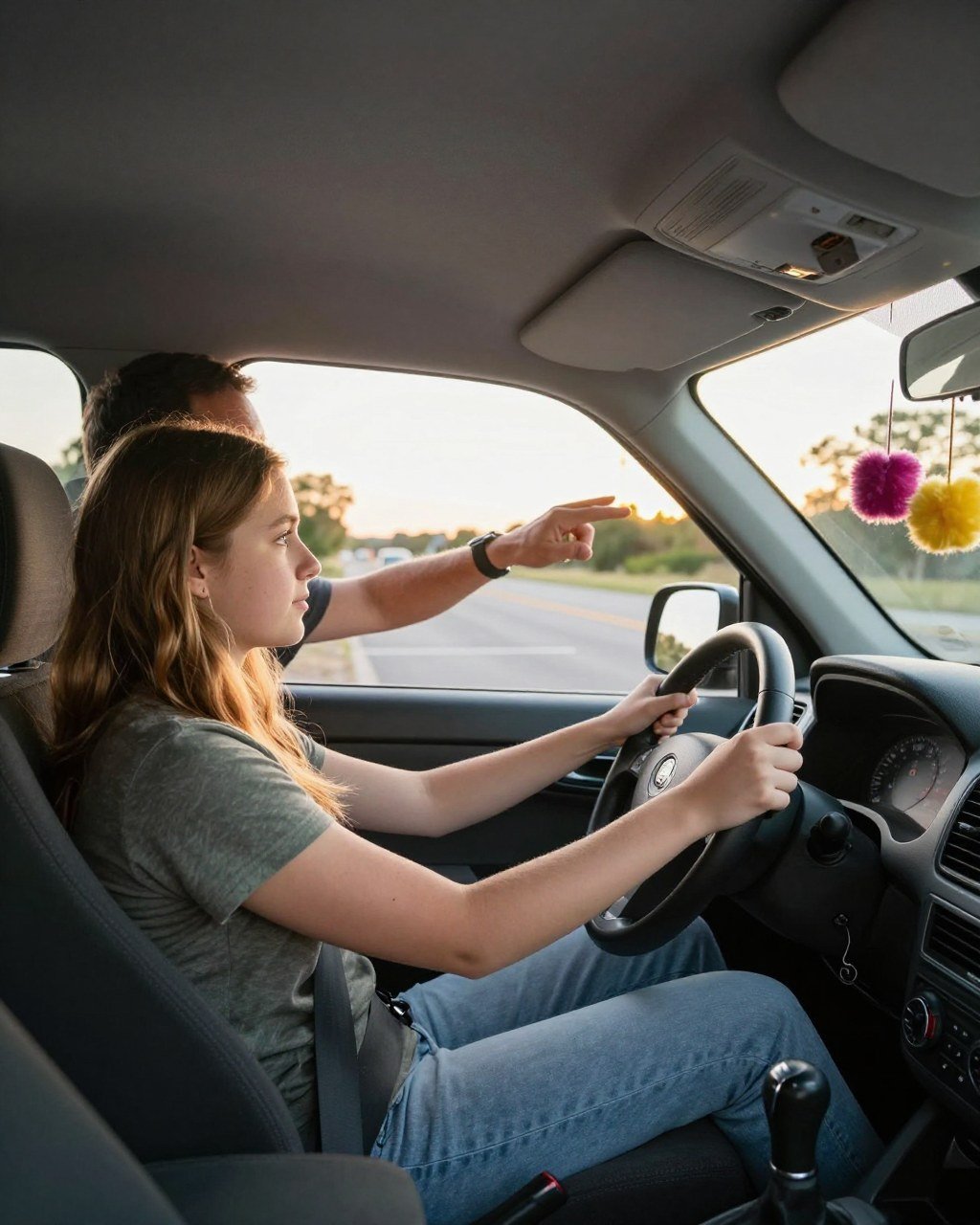
Once you are moving, watch for the teaching mechanism. A patient instructor typically introduces one skill at a time, explains it before asking you to try, lets you attempt it without interrupting, and then gives feedback on what actually happened. An impatient instructor tends to correct mid-manoeuvre, stack several instructions into one sentence, or take the wheel before you have had a chance to respond.
Signs the fit is working
- They let you finish a manoeuvre before commenting.
- They correct one thing at a time rather than listing every error.
- They adjust their tone and speed when you look or sound overwhelmed.
- They explain why a skill matters, not just what to do.
- They notice small improvements and name them.
Signs the fit is wrong
- They talk over you or dismiss your concerns.
- They correct every small error at once.
- They raise their voice, sigh or show visible frustration.
- They push you into traffic or a complex junction before you are ready.
- They make you feel embarrassed for asking a question.
Tell them how you learn before the lesson
Patience is easier to deliver when the instructor knows what you need. Before the first lesson, send a short message explaining:
- Whether you are a nervous learner, returning after a long break, or completely new.
- Whether you prefer instructions explained before you try, or step by step as you go.
- Whether you process better with spoken instructions, written steps, or a demonstration first.
- Whether you need extra time to respond before being corrected.
- Any past experience, including a bad lesson, that shapes how you feel in the car.
A patient instructor will use that information to plan the lesson. An impatient one will ignore it or treat it as an inconvenience. Either response tells you something useful.
If you are neurodivergent
Many autistic, ADHD and otherwise neurodivergent learners find standard driving instruction overwhelming because it combines multiple inputs at once: verbal instructions, mirror checks, road signs, other traffic and physical coordination. Ask the instructor how they reduce that load. Useful questions include:
- Can you give one instruction at a time and wait for me to act on it?
- Can you tell me the route or the manoeuvre before we start so I know what is coming?
- Can we practise a new skill in a quiet area before adding traffic?
- Can you write down the key steps so I can review them between lessons?
- How do you handle it if I need to stop and reset?
You are allowed to ask for what helps you learn. A good instructor will adapt; a poor one will insist there is only one way to teach.
If you are anxious
Driving anxiety is common and manageable. Tell the instructor before the first lesson so they can plan short, quiet routes and one skill at a time.
Watch out: Do not stay with an instructor out of politeness when the fit feels wrong. A single trial lesson that leaves you more anxious than before is information, not a failure. Trust what you noticed and act on it before you book a block of hours.
Finding Support for Nervous and Anxious Learners
Driving anxiety is common, and it is treatable. Many nervous learners do well with short lessons, quiet routes and one skill at a time.
Ask whether the instructor can start in a car park or a quiet street. Ask how they will help you practise breathing and staying calm when you feel tense.
If you are neurodivergent, ask how the instructor explains new skills. Some learners do best with written steps, a clear routine or time to process before the next instruction.
Booking Your First Lesson and What to Expect
When you book, ask about lesson length, the pick-up location and whether lessons can fit around work or school. Confirm the price in writing so there are no surprises.

Expect the first lesson to focus on getting comfortable. You may spend time learning the car's controls, checking mirrors and practising at low speed. That is normal and useful.
Bring any questions you wrote down. Tell your instructor how you are feeling at the start and at the end of the lesson. That honesty helps them plan the next one.
Switching Instructors When the Fit Is Wrong
Sometimes an instructor is qualified but simply not right for you. That is not a failure on your part. Learning styles and personalities do not always match.
If lessons leave you more anxious than before, it may be time to switch. Start by raising your concerns directly. Some instructors adjust their approach once they know what is not working.
Keep notes from each lesson, including what helped and what did not.
Frequently Asked Questions
How do I find a patient driving instructor?
Start with personal recommendations from people who have learned recently, then check each instructor's credentials and read their reviews for comments about calm, supportive teaching. Ask a short phone call or email whether they have experience with nervous learners and how they handle a student who freezes or makes mistakes. Shortlist two or three instructors and book a trial lesson before committing to a block of hours. Patience shows up in how an instructor responds to errors, not in how they describe themselves.
What should I look for in a driving instructor if I am nervous?
Look for an instructor who explains each task before asking you to do it, lets you practise in quiet streets first, and breaks lessons into manageable parts. Ask how they pace new skills and whether they will stop the lesson if you need a pause. Good instructors give specific, positive feedback and avoid raising their voice or sighing. If an instructor dismisses your anxiety, that is a signal to keep looking.
Can I change driving instructors if I do not feel comfortable?
Yes. You are not locked into a provider because you have booked a lesson or paid for a block. Tell the instructor or the school what is not working, such as pace, communication or the way feedback is given, and request a different instructor if the issue continues. Keep a note of which lessons went well so the next instructor can build on them. Changing early, rather than pushing through months of stressful lessons, usually saves time and money.
How can I make my first driving lesson less stressful?
Arrive with a clear list of your goals and any concerns, so the instructor can plan the lesson around them. Ask for a quiet practice area and a short first session, and let the instructor know if you prefer to talk through each step before doing it. Remember that the first lesson is mainly about getting to know the car and your comfort level, not about perfect driving. Most learners feel more settled after the first half hour.
Finding a patient driving instructor takes a little effort, but it pays off in confident, safer driving. If you want calm, personalised lessons from an instructor who understands nerves, Precision School of Driving can help you start at a pace that feels right. Book your first lesson today and take the first step toward driving with confidence.