 How-to
How to Prepare for Your First Driving Lesson in Adelaide
Quick Summary
Prepare for your first driving lesson by carrying your learner's permit and logbook, wearing comfortable clothes and closed-toe shoes with a thin, grippy sole, and eating a light meal beforehand. Expect the lesson to focus on getting comfortable, learning the controls, and gentle starting and stopping, not on driving far.
- Your instructor must sight your learner's permit before you drive on a public road.
- Bring your logbook to every lesson so supervised hours are recorded on the spot.
- Wear closed-toe shoes with a thin, grippy sole so you can feel the pedals.
- Arrive a few minutes early and confirm the exact meeting point in advance.
- Tell your instructor if you are nervous so they can break tasks into smaller steps.
Table of Contents
- What to Expect on Your First Driving Lesson
- What to Bring to a Driving Lesson
- How Long Is a Driving Lesson in Adelaide?
- How to Overcome Driving Lesson Nerves
- South Australian Learner Rules to Know Before Your First Lesson
- Manual Versus Automatic: Preparing for Your Lesson
- Your Step-by-Step First Lesson Checklist and Booking Your Next Session
- Frequently Asked Questions
What to Expect on Your First Driving Lesson
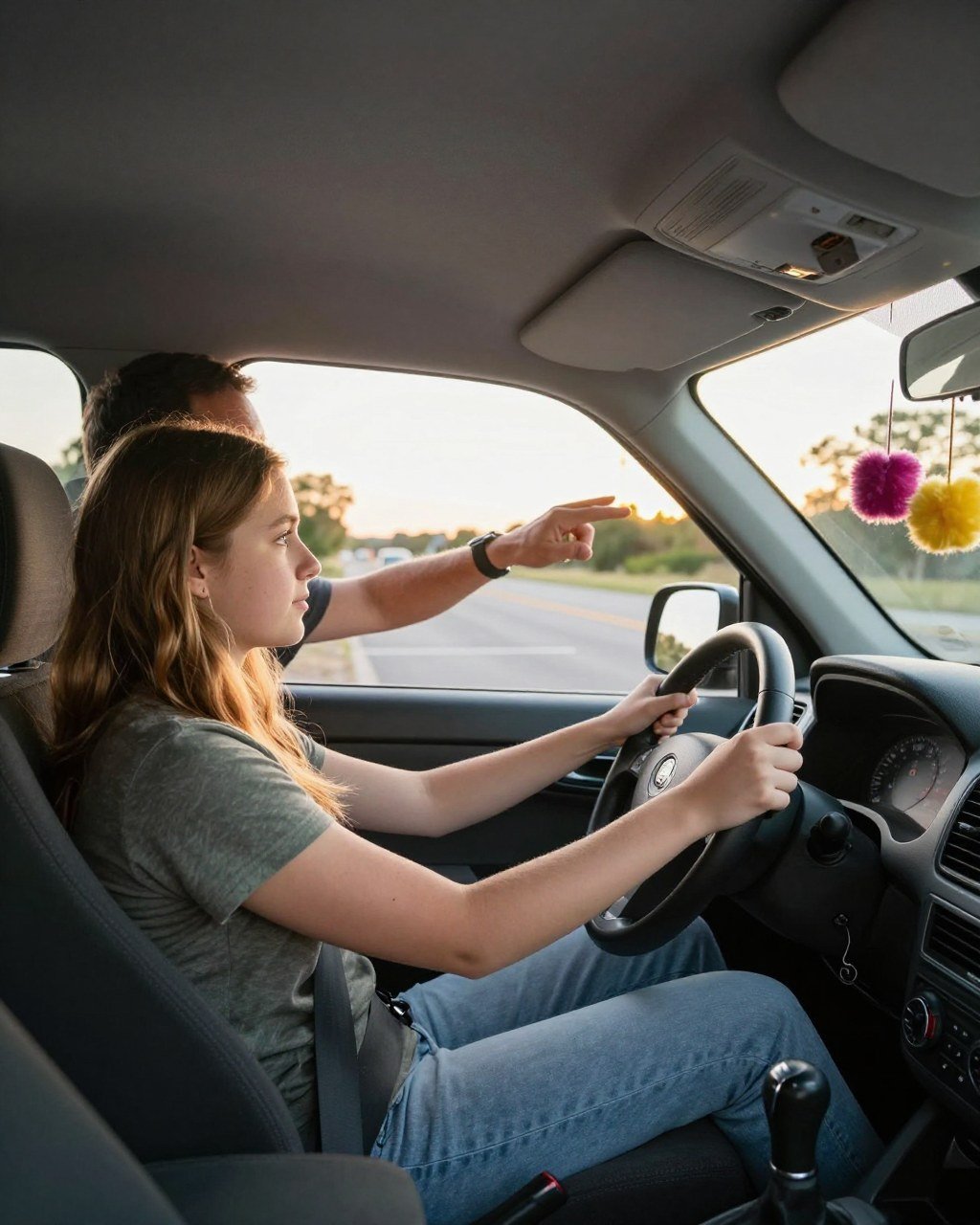
Your first driving lesson is mostly about getting comfortable, not about driving far. A first lesson usually opens with a conversation about the plan and how you are feeling. That conversation matters, because it sets the pace for everything that follows.
Expect a relaxed start. You should be able to ask questions at any point, and no question is too basic.
Lessons can be personalised, so the pace and the topics depend on what you already know and how you feel that day.
Vehicle and pre-drive familiarisation
Before the car moves, you will learn where things are. This is called pre-drive familiarisation, and it prevents panic later.
- Seat and mirror adjustment for a clear view and comfortable reach
- Seat belt fitting and why it is checked every time
- Location of the indicators, headlights, wipers and horn
- The handbrake, gear selector and, in a manual, the clutch
- The steering wheel, accelerator and brake pedal
Take your time here. Many learners feel less nervous once they know where the controls are.
Starting, stopping and basic vehicle control
Once you are settled, the instructor will guide you through starting the engine and moving off in a quiet area. Early goals are simple: start smoothly, steer gently, and stop safely.
A common mistake is pressing the accelerator too hard when you first move off. Light, steady pressure works better.
What to Bring to a Driving Lesson
A first lesson can be cut short or rescheduled if something essential is missing, so pack the night before rather than in the ten minutes before you leave.
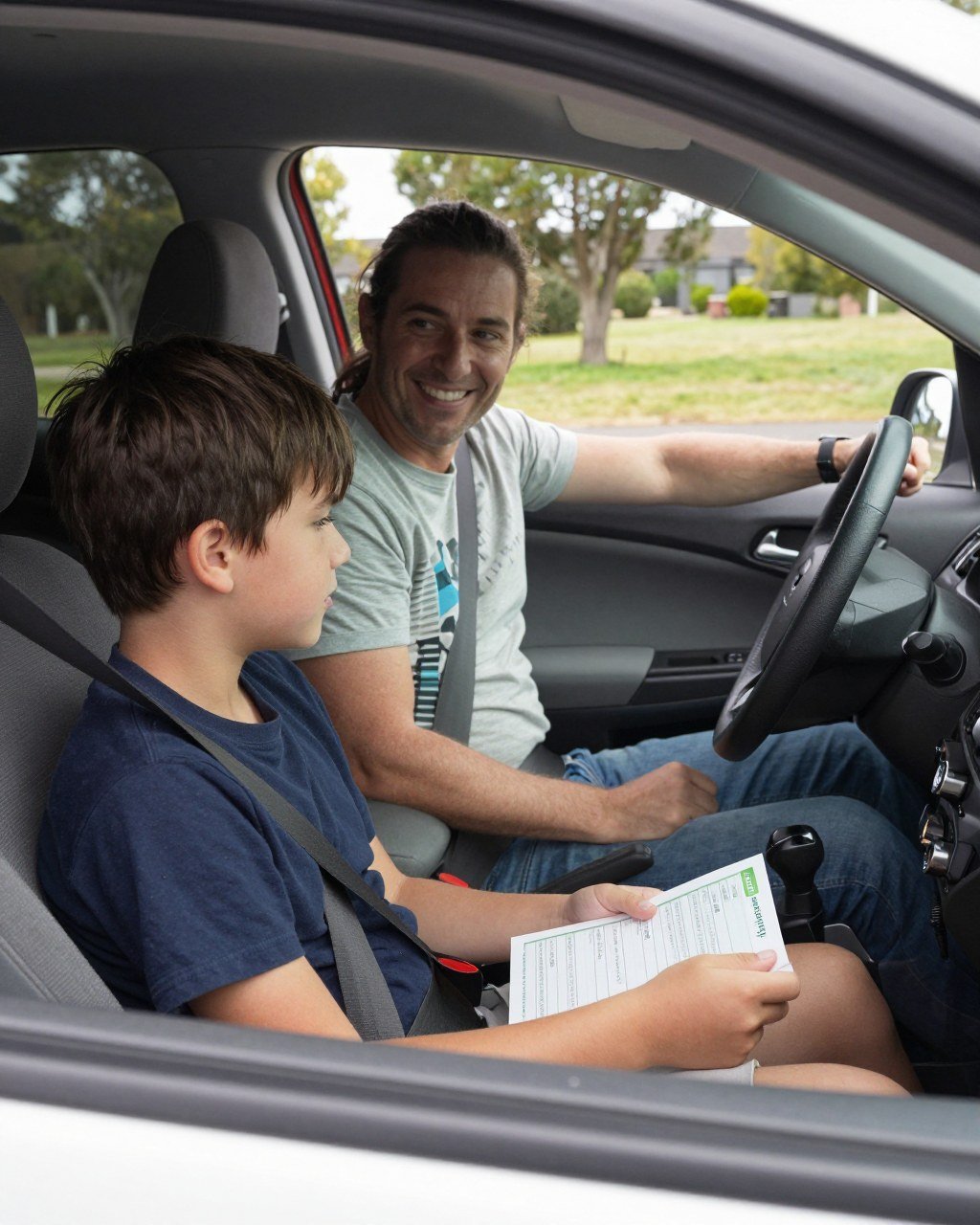
The essentials
- Your learner's permit. The instructor must sight it before you drive on a public road. A photo on your phone is not a substitute for the physical card in most cases, so carry the card.
- Your logbook. Bring it to every lesson so supervised hours are recorded on the spot. If you have done private practice, have those entries up to date too.
- Glasses or contact lenses if your permit has a vision condition. Driving without them can breach your permit conditions.
- Closed-toe shoes with a thin, grippy sole. You need to feel the pedals; thick soles and heels make clutch and brake control harder to learn.
- A water bottle and a light snack. Lessons are mentally tiring, and low blood sugar makes nerves worse.
- A phone with the meeting point confirmed, plus a notebook or notes app for questions you want to ask.
What to wear and what to leave at home
Wear comfortable clothing you can move in. Avoid long, loose coats, scarves or baggy sleeves that can catch on the wheel or pedals, and avoid platform shoes, thongs or boots with thick tread. Leave distracting jewellery and anything that restricts your head movement at home.
Meeting points and arrival
Confirm the exact meeting point and arrival time with your instructor in advance, and arrive a few minutes early so you are not rushed. If you are being dropped off, ask the person to leave rather than stay and watch, because an audience tends to increase first-lesson nerves.
Watch out: if you are meeting at a busy car park, agree on a specific bay or landmark, 'near the entrance' is not precise enough on a Saturday morning.
If you are anxious or worried about mistakes
Tell your instructor before the lesson starts if you are nervous, if you have had a bad experience in a car, or if you learn better with a particular style of instruction. Instructors can adapt to your needs, for example by breaking each task into smaller steps. Mistakes are expected and can be corrected calmly as they happen. If you need a pause, say so, stopping to reset is part of learning, not a failure.
If you have support needs
If you have a disability, a language preference, or a learning style that needs explaining, raise it when you book rather than on the day.
Packing the right items before your first lesson helps it run smoothly, so use this quick reference.
| Item | Why it matters | Note |
|---|---|---|
| Learner's permit | Instructor must sight it before driving on a public road | Carry the physical card; a phone photo is usually not enough |
| Logbook | Records supervised hours on the spot | Bring it to every lesson |
| Glasses or contact lenses | Needed if your permit has a vision condition | Driving without them can breach permit conditions |
| Closed-toe shoes with thin, grippy sole | Helps you feel the pedals | Avoid thick soles, heels and thongs |
| Water and a light snack | Lessons are mentally tiring | Low blood sugar makes nerves worse |
How Long Is a Driving Lesson in Adelaide?
Lesson length can be discussed with your instructor, and some learners prefer shorter sessions while they build confidence.
Lesson length is only one part of the picture.
Precision School of Driving offers flexible scheduling. For current lesson prices, please check the Precision School of Driving website or request a quote directly.
How to Overcome Driving Lesson Nerves
Nerves are normal, especially on the first lesson. Feeling anxious does not mean you will struggle. Many learners feel better once they realise the instructor is there to help, not to judge.
Try these steps before and during your lesson:
- Get a good night's sleep the night before
- Eat a light meal a few hours before the lesson
- Arrive a few minutes early so you are not rushing
- Tell your instructor if you feel overwhelmed, because they can slow things down
- Focus on one task at a time, such as steering or mirror checks
If you make a mistake, that is part of learning. A good instructor will talk you through it calmly, and you will get better with each session.
South Australian Learner Rules to Know Before Your First Lesson
Most first-lesson guides stay vague about the rules, which is unhelpful when you are about to book. The requirements below are the ones that affect your first lesson specifically; confirm current details on the Department for Infrastructure and Transport (DIT) website before you book, because thresholds and processes are reviewed from time to time.
Your learner's permit
You cannot take a lesson on a public road without a current learner's permit.
If you hold an interstate or overseas learner licence, ask DIT or Service SA how it is recognised before you book, because the rules for converting or driving under a foreign permit differ from the standard pathway.
Supervision and who can sit beside you
A learner driving on a South Australian learner's permit must be supervised by a person who holds a full (not provisional) licence for that class of vehicle and has held it for the required period. Private practice with a parent or friend is separate from paid lessons, and the supervisor must be seated beside you and not affected by alcohol or drugs.
A common pattern is for learners to mix instructor lessons with private practice, because supervised hours accumulate faster and cheaper that way. Keep the two logged separately so your instructor can see what you have already covered.
Logbook and supervised hours
The exact number of supervised hours required before you can attempt the hazard perception test and practical driving test is set by the Department for Infrastructure and Transport (DIT) and can change, so check the current requirements on the official DIT site.
What this means for your first lesson
Before the lesson, confirm three things: your permit is current, your logbook is with you, and you know whether you are driving an automatic or manual. For the full licensing process and requirements in Adelaide, read our getting a driving licence in Adelaide guide. Tell your instructor if you have already done private practice, because they will adjust the starting point. If you are unsure which stage you are at, ask the instructor to walk you through the DIT pathway in plain language, that is part of the job, and it is better to ask early than to discover a gap when you are ready to book your test.
Manual Versus Automatic: Preparing for Your Lesson
Your choice of transmission affects what you practise first.
- Automatic: Focus on smooth acceleration, braking and using the gear selector correctly. Most learners find automatics easier to start with.
- Manual: Expect to spend extra time on the clutch, biting point and gear changes. Many learners need a few extra lessons to feel comfortable.
Tell your instructor which transmission you plan to use for your test, so lessons match your goal.
Your Step-by-Step First Lesson Checklist and Booking Your Next Session
Use this checklist before your first lesson:
- Learner's permit or licence ready
- Logbook packed, if required
- Glasses or contacts, if needed
- Comfortable clothes and closed-toe shoes on
- Water and a light snack in your bag
- Good night's sleep and a light meal beforehand
- Arrival time confirmed, with a few minutes to spare
After your first lesson, review what you learned and note any questions for next time. Then book your next session while the lesson is still fresh. Regular lessons build skills faster than long gaps between sessions.
Precision School of Driving is calm, patient and personalised, with a focus on helping anxious or nervous drivers build confidence. Book your next lesson with Precision School of Driving and start building the skills you need to drive safely on Adelaide roads.
Frequently Asked Questions
What should I bring to my first driving lesson?
Bring your learner's permit, your logbook if you are keeping one for supervised hours, and any glasses or contact lenses you need for driving. Comfortable closed-toe shoes with good grip are important, as is a light meal beforehand so you are not hungry or distracted. Have any questions about the lesson ready to ask, and let your instructor know in advance about any learning needs or anxiety so the first session can be planned around you. Precision School of Driving can confirm exactly what to bring when you book, and current pricing is available on the website.
What should I wear to a driving lesson?
Wear comfortable, practical clothes that do not restrict your movement, such as a t-shirt or jumper and trousers or jeans. Choose closed-toe shoes with a flat, non-slip sole so you can feel the pedals properly. Avoid heavy jackets that make it hard to reach the seat belt and steering wheel, and avoid loose footwear like thongs, which can slip off the pedals. Dressing comfortably helps you settle in, and a calm start to the lesson makes the controls easier to learn.
What happens during your first driving lesson?
A first lesson usually begins with a short talk about your experience and goals. Many first lessons cover adjusting the seat, mirrors and seat belt, then starting and stopping and basic control. Nothing is expected of you beyond learning the basics, and you can set the pace of the lesson.
Should I practise before my first driving lesson?
You do not need any driving experience before your first lesson, but reviewing the road rules and getting familiar with the basic car controls can make the session feel less overwhelming. Sitting in a parked car and identifying the mirrors, indicators, gear selector and pedals is a useful start. Keep any home practice gentle, and do not attempt to drive on public roads unless you are supervised and legally allowed to do so under your learner requirements.