 How-to
How can you pass the hazard perception test in South Australia?
Last Updated: October 26, 2026
Quick Summary
Tips for passing the hazard perception test in south in Australia combine real driving experience with focused simulator training and deliberate practice. Build genuine hazard awareness by practising in short, focused sessions alongside actual driving lessons, learning to click when a competent driver would begin to react, not earlier or later.
- Practice in short, focused twenty-minute sessions rather than marathon blocks to develop pattern recognition effectively.
- Combine simulator practice with real-world driving instruction to develop hazard awareness faster than practising only one way.
- Click when a competent driver would begin to react to a developing hazard, not when a situation is already dangerous.
- Review every practice session including clips you got right to confirm you clicked for the correct reason at the right moment.
- Isolate weak scenario types and repeat them until your timing is consistent before returning to mixed practice.
Table of Contents
- What the Hazard Perception Test Involves
- Hazard Perception Test Practice: Building Your Skills
- Understanding Hazard Perception Test Questions and Scenarios
- Common Hazard Perception Test Mistakes to Avoid
- Using a Hazard Perception Test Simulator Effectively
- Key Hazard Recognition Skills for Every Scenario
- Prepare for Your Test With Precision School of Driving
- Frequently Asked Questions
What the Hazard Perception Test Involves
The hazard perception test is a computer-based assessment that measures your ability to spot developing hazards on the road.
This test forms a critical part of getting your provisional licence. The clips show everyday situations, intersections, residential streets, highways, car parks, lasting 10 to 60 seconds each. Your job is to identify hazards early, before they become dangerous.
The test isn't designed to trick you, it measures whether you've developed the awareness that keeps you safe on real roads. That's why tips for passing the hazard perception test in south in Australia matter: you're building genuine safety skills, not memorising answers.
The format is straightforward: you sit at a computer, watch video clips, and click when you spot a developing hazard. Each click is timestamped, too early and you haven't identified a real hazard; too late and you've missed the moment a competent driver would have reacted.
Hazard Perception Test Practice: Building Your Skills
Building your skills takes deliberate, focused practice, you can't cram the night before. Your brain needs time to develop the pattern recognition that spotting hazards requires.
Start with practice scenarios that show what a developing hazard actually looks like. Many learners confuse a hazard with a situation: a parked car isn't a hazard, but a parked car about to pull out into your path is. The difference is everything.
Practice in short, focused sessions rather than marathon blocks, twenty concentrated minutes beats two hours of distracted clicking. After each session, review your missed hazards and ask what changed in the scene that signalled danger.
A systematic review of hazard perception research shows that learners who combine simulator practice with real-world driving instruction develop hazard awareness faster than those who practise only one way. This means your practice sessions work best alongside actual driving lessons.
Common practice mistakes include:
- Clicking randomly and hoping something lands
- Focusing only on the centre of the screen
- Rushing through clips without thinking
- Practising the same scenario type repeatedly
structured driving lessons for 2026 learners(page:3) can accelerate your hazard perception development by teaching you what to look for before you sit down at the computer.
Understanding Hazard Perception Test Questions and Scenarios
Each scenario presents a specific type of road situation. Understanding the patterns helps you recognise developing hazards faster.
Intersection scenarios are the most common: a vehicle approaches from a side street, a pedestrian steps toward a crossing, traffic lights change.
Overtaking scenarios test your ability to spot when a car ahead is about to pass. Watch for the driver checking mirrors, drifting toward the centre line, or accelerating slightly.
Turning vehicle scenarios show cars signalling or beginning to turn. Click when you first notice the turn is happening, not after it's complete.
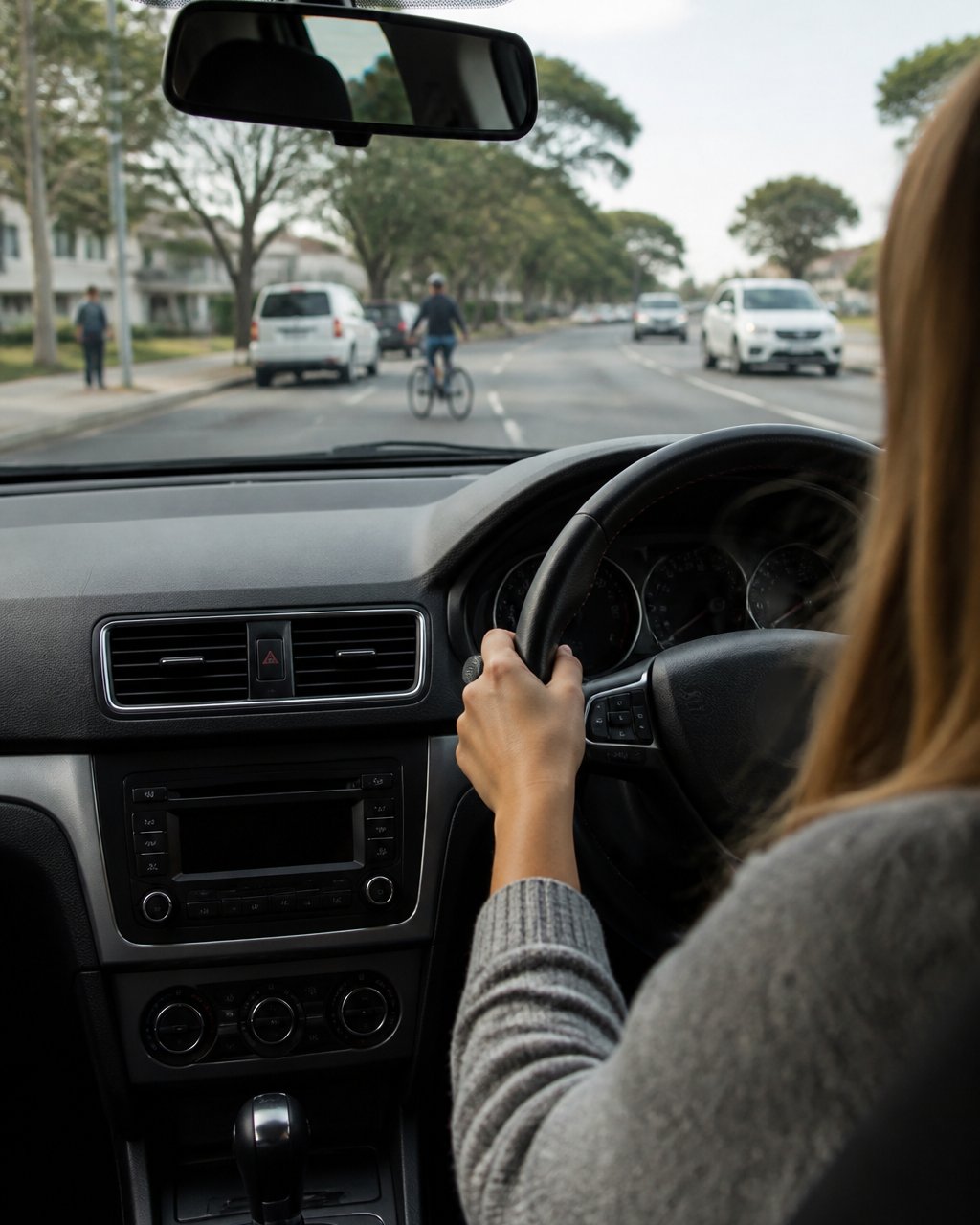
Pedestrian scenarios require you to anticipate when someone might step into the road. Watch for body language: leaning forward, looking at their phone, or hesitation at the kerb.
Safe distance scenarios test your awareness of following distance and side clearance.
The key principle across all scenario types: a developing hazard is the moment a competent driver would begin to react. Not earlier, that's overreacting. Not later, that's too slow.
Common Hazard Perception Test Mistakes to Avoid
Most unsuccessful attempts come down to two opposite errors: responding too early or too late. This section gives you a diagnostic approach to work out which one you are making.
Diagnose your failure pattern first. After a practice session, sort every missed clip into three buckets: early (clicked before the hazard developed), late (the safe window had closed), or missed entirely. The fullest bucket tells you what to fix: early clicks mean you're reacting to situations rather than developing hazards; late clicks mean you recognise hazards but don't anticipate them; missed clips usually mean you're fixating on one part of the frame.
Overreacting to situations, not hazards. A parked car is a situation; a parked car with a door opening or indicator flashing as it prepares to pull out is a developing hazard.
Clicking repeatedly or randomly. Some learners click several times per clip hoping one lands in the window. This teaches you nothing and can be flagged as pattern clicking.
Ignoring the question prompt. Clips ask different things. If the prompt asks when it is safe to proceed, clicking on every hazard will not help.
Not reviewing correct answers. Reviewing only your misses hides lucky guesses.
Technical and accessibility mistakes. An unsupported browser, poor connection, or unfamiliar device creates avoidable problems, run the practice test on your intended setup beforehand. If you need adjustments for a disability, vision impairment or language support, arrange these with the test provider before your booking, not on the day.
What to do after a failed attempt. A failed attempt is diagnostic information, not a verdict.
Using a Hazard Perception Test Simulator Effectively
A simulator is only useful if you understand what it measures. The test doesn't reward the fastest click, it rewards clicking inside the window when a competent driver would begin to respond to a developing hazard.
Know the interface before you practise. In the official test you watch a short clip, then a question or prompt appears and you respond with the mouse. Some clips ask when it is safe to proceed; others ask when you would slow down or act.
Understand how timing is scored. Responses are timestamped. Clicking before a hazard develops earns nothing and can count against you if it looks like random clicking; clicking after the safe window closes also earns nothing.
Use a structured simulator routine:
- Watch the tutorial or demonstration clip for each scenario type before attempting it.
- Attempt a small set of clips, then stop and review every response, including the ones you got right.
- Note whether each miss was early (overreacting) or late (delayed recognition).
- Repeat the same scenario type until your timing is consistent, then move on.
- Finish each session by reviewing your click timing against the model response where the tool provides one.
Check your setup before test day. The official online test requires a supported browser and stable connection.
Track readiness, not just scores. The best readiness signal is consistency: responding inside the window across pedestrian, intersection, merging and following-distance scenarios, not just the easy ones. If accuracy swings widely between sessions, you're still guessing.
structured driving lessons for 2026 learners(page:3) can accelerate your hazard perception development by teaching you what to look for before you sit down at the computer.
Key Hazard Recognition Skills for Every Scenario
Recognising developing hazards relies on three core skills: observation, anticipation, and decision-making.
Observation means scanning the full road environment. Check your mirrors regularly. Watch for movement at the edges of your vision. Notice changes in traffic flow or pedestrian behaviour.
Anticipation means predicting what's likely to happen next. If a car ahead has brake lights on and is slowing, anticipate a sudden stop.
Decision-making means judging the exact moment a situation becomes dangerous enough to require a reaction, where many learners struggle. Too early and you're overreacting; too late and you've missed the window.
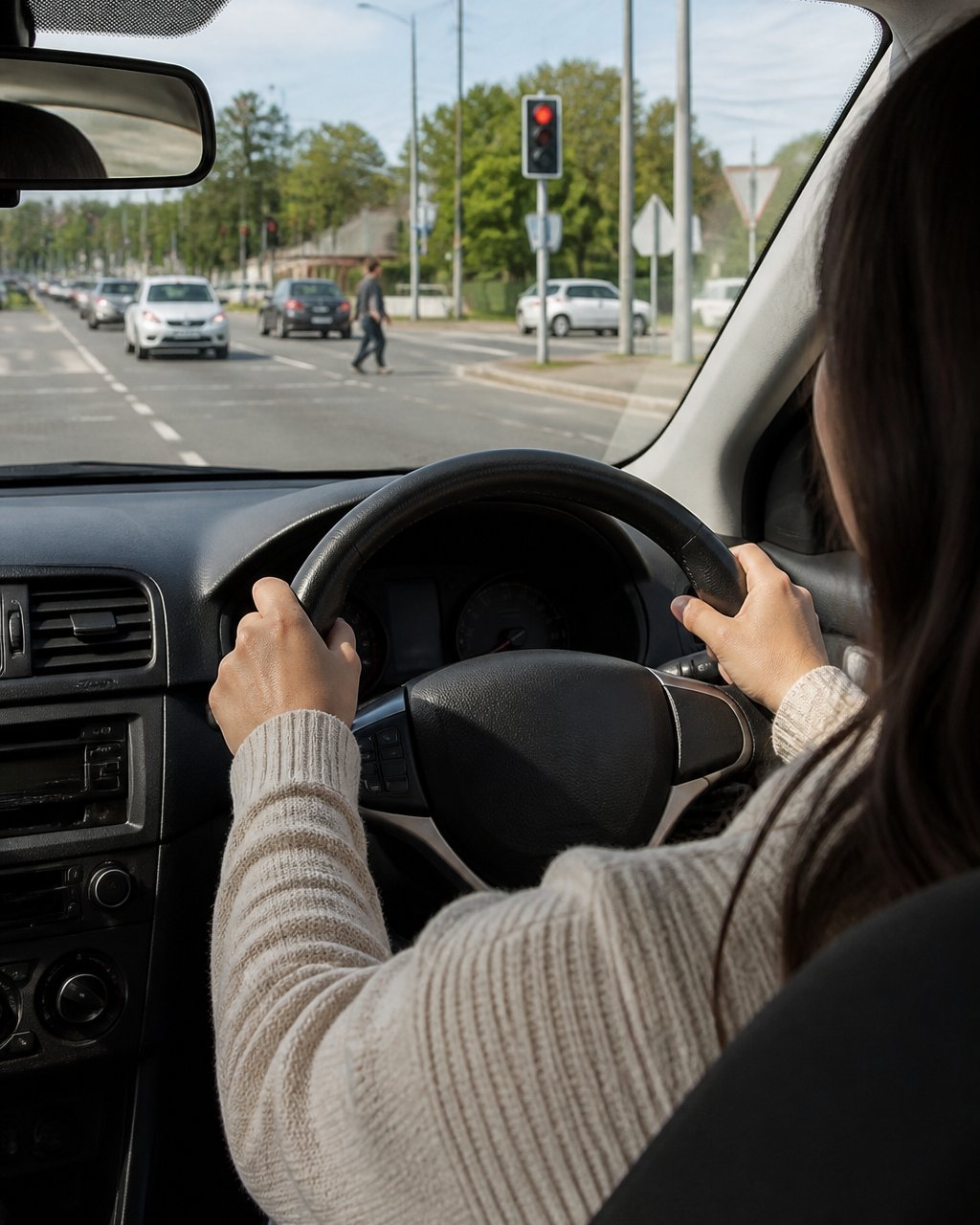
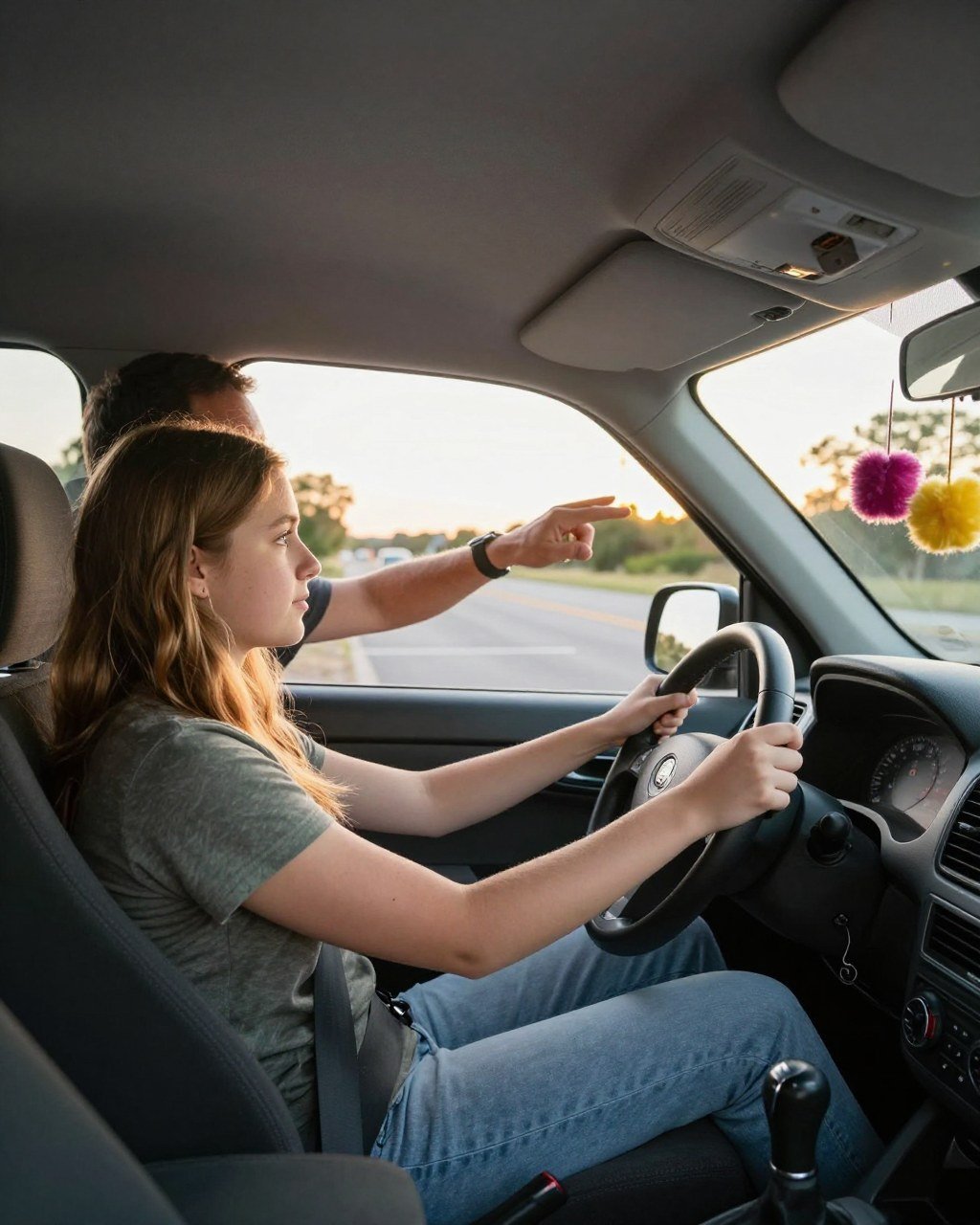
Practise these skills in real driving first. Behind the wheel with an instructor, you can discuss hazards as they develop and have early warning signs pointed out.
Common hazard cues to watch for:
- Brake lights lighting up ahead
- Vehicles drifting between lanes
- Pedestrians looking away from traffic
- Cyclists signalling or changing position
- Parked cars with engines running or brake lights on
- Changes in road surface or weather conditions
- Other drivers checking mirrors or slowing suddenly
Prepare for Your Test With Precision School of Driving
Passing the hazard perception test requires more than clicking through practice scenarios, tips for passing the hazard perception test in south in Australia combine real driving experience with focused simulator training.
Our approach at Precision School of Driving combines on-road instruction with hazard awareness coaching. When you learn to drive with us, we point out developing hazards in real time, you see them, we explain them, and your brain starts recognising the patterns. By test day, hazard recognition feels natural rather than forced.
We also work with learners who get anxious behind the wheel or struggle with test pressure. We help you build confidence so your real skills show on test day.
| Preparation Element | What It Does | Why It Matters |
|---|---|---|
| Real driving lessons | Teaches hazard recognition in live traffic | Builds genuine safety skills, not just test technique |
| Simulator practice | Lets you rehearse the test format safely | Reduces test-day anxiety and improves timing |
| Instructor feedback | Explains why hazards matter and when to react | Accelerates learning faster than solo practice |
| Progress tracking | Shows improvement and identifies weak areas | Keeps motivation high and targets practice effectively |
getting your driving licence in Adelaide(page:1) includes the hazard perception test as a key milestone. We can help you prepare for every stage of that journey.
Frequently Asked Questions
What is the hazard perception test in South Australia?
The hazard perception test is a computer-based assessment that measures your ability to recognise developing hazards in video scenarios. You watch CGI clips of real-world driving situations and click your mouse or touchscreen when you spot a hazard developing. The test evaluates your anticipation, observation, and decision-making skills, not just your reaction speed. It's a mandatory part of the provisional licence application process.
How many questions are in the hazard perception test?
The test contains 25 video scenarios, each lasting between 1 and 3 minutes. You need to identify at least 13 developing hazards to pass. Each scenario presents realistic road conditions, intersections, pedestrian crossings, overtaking situations, and weather changes. Not every scenario contains a hazard; some are designed to test whether you react appropriately when no hazard is present. Overreacting to safe situations can lower your score.
What should I do if I fail the hazard perception test?
If you don't achieve the passing score on your first attempt, you can retake the test. Many candidates improve significantly on their second try after reviewing their mistakes and practising with a simulator or instructor feedback. Consider booking professional driving lessons with an instructor experienced in hazard awareness training, they can help you develop more accurate recognition skills before your next attempt.
How can I practise for the hazard perception test effectively?
Use online practice simulators that replicate the real test format, focusing on timing your responses and recognising subtle cues. Watch for developing hazards rather than obvious ones, a pedestrian stepping towards the kerb, a vehicle drifting into your lane, or brake lights ahead. Take breaks between practice sessions to avoid fatigue affecting your concentration. Work with a driving instructor who can review your responses and explain why certain situations are hazards, building your hazard awareness in real-world driving as well.
Ready to develop the hazard awareness that keeps you safe? INTERNAL_LINK: how to pass your driving test covers the full testing process, including hazard perception strategies. At Precision School of Driving, we specialise in helping learners build genuine confidence and safety skills. Book a lesson with us and let's get you ready for test day with instruction tailored to your pace and learning style.