 How-to
Why Driving Lessons Cost More: A Transparent Breakdown
Table of Contents
- The Real Cost Behind Every Driving Lesson
- What Your Driving Lesson Cost Actually Pays For
- How Automatic Driving Lesson Cost Differs from Manual
- Geographic Location and Regional Pricing Differences
- How Many Driving Lessons Do I Need and What Will It Cost
- Driving Lesson Packages and Block Booking Value
- How to Compare Lesson Prices and Assess Real Value
- Ways to Reduce Driving Lesson Costs Without Compromising Safety
- Frequently Asked Questions
Last Updated: October 5, 2026
The Real Cost Behind Every Driving Lesson
Hourly rates for driving lessons can feel steep, but that number doesn't tell the whole story.
At Precision School of Driving, learners ask this question all the time. A driving lesson isn't just an hour of someone's time.
Understanding these costs shows why the cheapest option isn't always the best value, and how to spot genuine quality when comparing schools.
What Your Driving Lesson Cost Actually Pays For
Breaking down where your lesson fee goes reveals why driving lessons cost what they do.
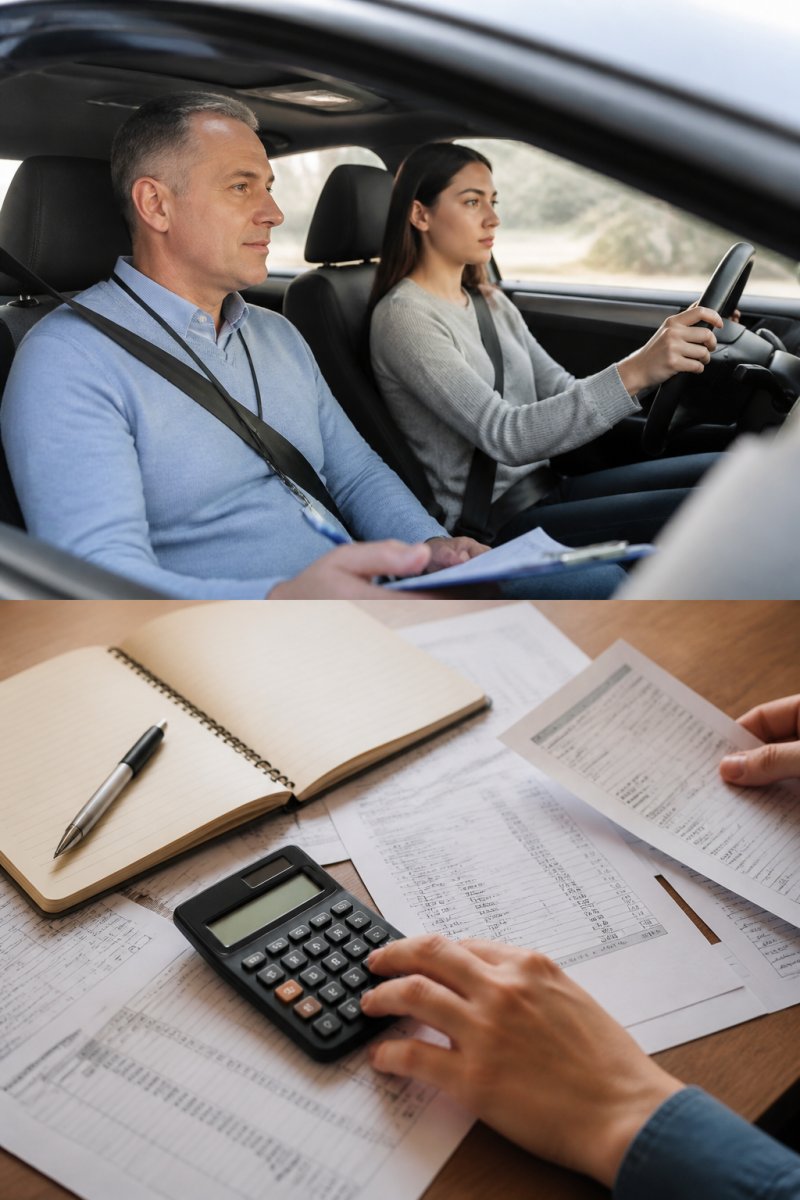
Instructor wages and business overhead
Your instructor's hourly rate isn't pure profit. It covers their salary plus time on administration, bookings, inquiries, cancellations, lesson records, and test preparation paperwork.
Many schools also invest in professional development: refresher courses on road rules, teaching methods, safety protocols, certifications, and vehicle technology, essential to quality instruction, not optional extras.
Business overhead adds another layer: rent, phone systems, booking software, accounting, and marketing. A professional school needs these systems to keep lessons running on schedule.
Vehicle costs and maintenance
The car itself is a significant investment.
That vehicle needs constant maintenance. Tyres wear faster under instruction, brakes, clutches, and transmissions take more strain, and servicing, oil changes, and inspections happen more often than for a private car.
Fuel is another direct cost: a vehicle running lessons all day burns through petrol, and travel between pickups adds more. It's built into your lesson fee.
Insurance and compliance
Driving schools carry specialised insurance, more expensive than personal cover, protecting business and learner against the higher risk of inexperienced drivers on public roads.
Compliance costs are invisible but real: maintaining records, tracking learner progress, meeting vehicle safety standards, and lodging documentation with transport authorities all cost time and money.
How Automatic Driving Lesson Cost Differs from Manual
Transmission type changes both the hourly rate and the total cost to test readiness, and the two effects can pull in opposite directions. Understanding the mechanism helps you compare quotes on an equivalent basis.
Why manual lessons often carry a higher rate
A manual lesson adds an extra skill layer: coordinating clutch friction point, gear selection, and three pedals while reading traffic. More time goes to low-speed control, hill starts, clutch feathering, gear changes, and less to scanning, gap selection, and hazard perception.
Most learners need more manual hours than automatic hours to reach the same standard, so even a modest rate difference compounds across the total lesson count.
Why manual vehicles cost more to run
The vehicle side widens the gap. A clutch in an instruction car wears faster because it absorbs repeated partial engagements from learners, so replacement is a scheduled expense priced into the manual rate. Manuals also tend to be paired with older, higher-kilometre fleet vehicles, shifting costs toward maintenance.
Where the automatic advantage disappears
Automatic lessons are not automatically cheaper. Three patterns are common:
- Flat-rate schools charge the same hourly rate for both transmissions and absorb the manual maintenance cost across the fleet. In that case, choosing automatic saves you hours, not dollars per hour.
- Automatic-only schools sometimes charge a premium because their fleet is newer and the vehicles cost more to buy. The rate can be higher than a manual lesson at a mixed-fleet school.
- Electric and hybrid instruction vehicles are increasingly automatic by design. They reduce fuel and servicing costs but carry higher purchase prices, so the hourly rate may sit above a comparable petrol manual.
How to compare manual and automatic quotes properly
Don't compare hourly rates in isolation. Ask each school three questions:
- What is the hourly rate for each transmission, including any vehicle-type surcharge?
- Based on your records, what is the average number of hours a learner needs in each before they are test-ready?
- Does the rate change if you book a block, and does the block apply to both transmissions?
Multiply rate by typical hours for a comparable figure. A higher automatic rate with fewer average hours can be cheaper overall; a lower manual rate with a longer course can cost more in total.
The transmission choice is also a skills choice
Cost isn't the only variable. Manual gives you flexibility to drive any vehicle and suits trades, rural work, and older fleets. Automatic lets you focus on road craft from lesson one, which many anxious learners find builds confidence faster.
Geographic Location and Regional Pricing Differences
Where you take lessons shapes what you pay.
Regional areas sometimes offer lower rates because operating costs are lower, but fewer driving schools can limit choice and keep prices competitive rather than low.
Local demand matters too: areas with many learners competing for instructor availability see higher rates, while regions with fewer learners may offer more flexible pricing.
Travel time influences cost too.
How Many Driving Lessons Do I Need and What Will It Cost
This question determines your budget, and most price lists avoid answering it. A per-hour rate tells you almost nothing until you connect it to the hours you'll realistically need, the fees outside the lesson fee, and the free practice you can do.
The hour range and what drives it
Most learners need 40 to 120 hours of supervised driving before a practical test. The range reflects starting confidence, prior experience, road complexity, and how consistently you practise between lessons.
Three factors move you up or down that range more than anything else:
- Practice between lessons. Learners who drive regularly with a qualified supervising driver progress faster per paid hour. Learners who only drive during paid lessons tend to need more of them.
- Lesson frequency. Weekly lessons keep skills warm. Fortnightly or sporadic lessons often mean part of each session is spent re-establishing feel.
- Learning environment. Dense urban roads, complex intersections, and heavy traffic take longer to master than quieter regional roads.
What the total cost actually includes
Your total spend to become test-ready isn't just lessons multiplied by rate. It typically includes:
- Paid lessons at the school's hourly rate, or a discounted block rate.
- A practical driving test fee, payable to the state or territory transport authority, separate from any lesson fee.
- A vehicle hire fee for the test, if you use the driving school's car rather than your own. Many schools charge a test-day package that includes a warm-up lesson and the vehicle.
- Any licence application or issuance fee once you pass.
- Optional extras such as mock tests, night-driving modules, or motorway lessons.
Test and licence fees are set by government and vary by jurisdiction, so check your local transport authority's current schedule rather than a school's estimate.
A qualified example scenario
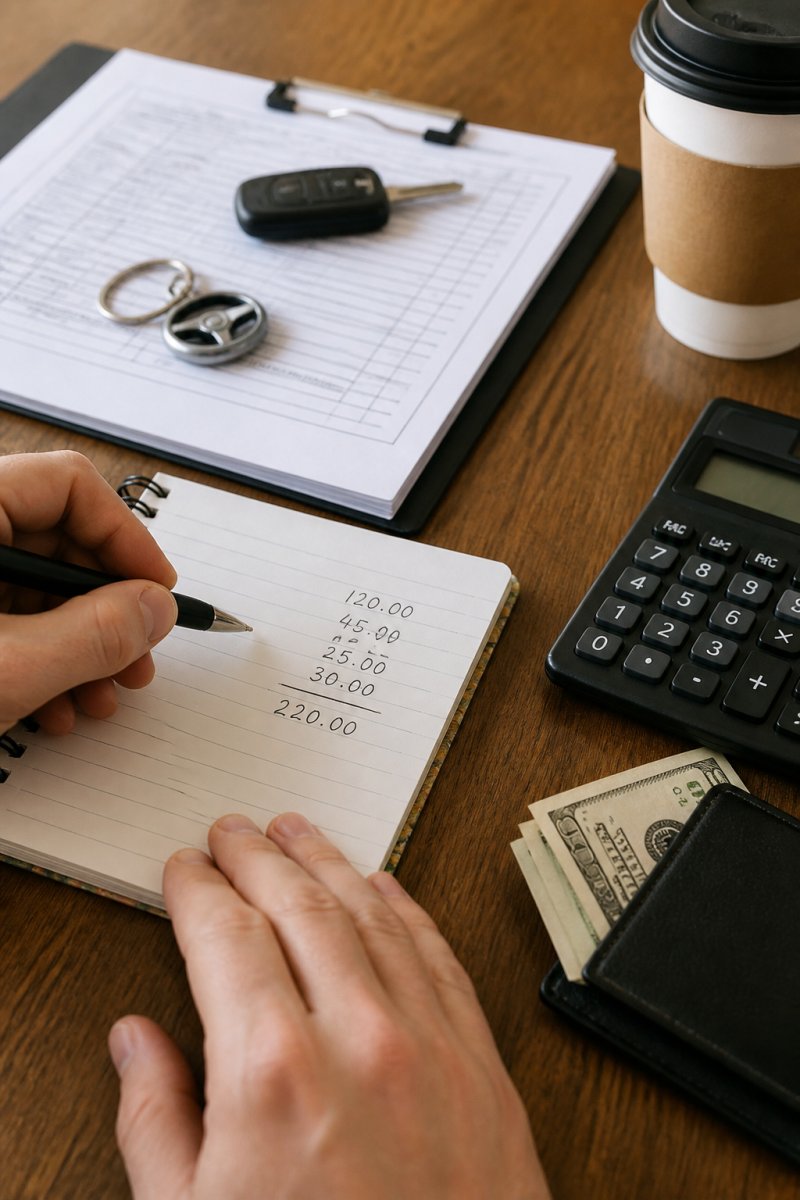
Consider a learner who books ten discounted lessons, practises twice weekly with a supervising driver, and needs a further block before testing. Their spend breaks into two lesson blocks, the test-day vehicle package, and government test and licence fees, the blocks are the largest line, the package a fixed add-on, and the government fees outside the school's control.
A learner who practises rarely may need three or four blocks instead of two. Same hourly rate, materially different total, which is why comparing schools on rate alone is misleading.
How to estimate your own number
A practical approach:
- Ask each school for their average hours to test readiness for learners with your experience level. Reputable schools track this.
- Book a single assessment lesson first and ask the instructor for an honest estimate of your likely hour count.
- Multiply that estimate by the block rate, not the single-lesson rate.
- Add the test-day vehicle package and the government test and licence fees.
- Compare the totals, not the hourly rates.
Intensive courses and the total-cost trade-off
Intensive courses compress instruction into a short window. They suit learners with significant supervised practice who need polish before a test, but rarely suit complete beginners, since skill consolidation takes time. If quoted an intensive package, ask how many hours it includes and whether a test booking is guaranteed, the per-hour rate can look attractive while the total package is larger than you need.
Check current practical driving test and licence fees for your state or territory
Driving Lesson Packages and Block Booking Value
Many driving schools offer packages where you book multiple lessons upfront, typically at a small discount compared to single lessons.
Block booking also benefits schools: income upfront, fewer cancellations, and certainty to reserve instructor time and vehicles, which is why they pass some savings on.
Some packages target specific goals, test preparation, confidence building, or intensive courses, and often include extras like mock test drives or tailored focus areas.
How to Compare Lesson Prices and Assess Real Value
Comparing hourly prices alone misses the real picture: two schools charging different rates can deliver very different value.
Check what's included. Does the fee cover instructor, vehicle, and fuel?
Look at instructor experience.
Check vehicle quality. Newer, well-maintained dual-control cars are safer and more comfortable; older vehicles may be cheaper to run but stress nervous learners.
Ask about cancellation policies and flexibility. Some schools charge cancellation fees, others don't, real value if your schedule is unpredictable.
Precision School of Driving focuses on personalised instruction for anxious and nervous drivers. We invest in patient, experienced instructors and well-maintained vehicles because these factors affect how quickly learners build confidence and progress toward their test.
Ways to Reduce Driving Lesson Costs Without Compromising Safety
Smart choices can lower what you spend without cutting corners on safety or instruction quality.
Book packages rather than single lessons. Packages offer modest discounts and lock in commitment, helping you progress consistently rather than sporadically.
Check for introductory offers. A discounted first lesson lets you experience the teaching style and vehicle before committing to a full package.
Driving lessons cost more because they're genuinely expensive to deliver safely and effectively. Every element, instructor, vehicle, fuel, insurance, expertise, carries real cost.
Frequently Asked Questions
Are automatic driving lessons cheaper than manual lessons?
Automatic driving lesson cost can vary depending on vehicle availability and instructor demand rather than a fixed price difference. Automatic vehicles are often easier to learn in initially, which may reduce the total number of lessons needed to reach test-ready standard. However, instructors typically charge by the hour regardless of transmission type. The real saving comes from needing fewer overall lessons, not a lower hourly rate. Compare what each instructor offers and ask whether their automatic vehicles are regularly available before booking.
What's included in the price of a driving lesson?
Your driving lesson cost covers the instructor's time and expertise, use of a fully insured and maintained vehicle, fuel, and the instructor's business overheads such as insurance, compliance, and scheduling systems. It also reflects the instructor's liability and the cost of keeping the vehicle roadworthy and safe. When comparing prices, ask what's included and whether the instructor offers flexible scheduling.
How many driving lessons do I need to be test-ready?
Most learner drivers need between 40 and 120 hours of professional instruction before they're ready for a driving test, depending on prior experience, confidence, and learning pace. The total cost depends on how many lessons you need multiplied by the hourly rate. Rather than choosing based on price alone, focus on finding an instructor who understands your learning style and pace.
How can I reduce the cost of learning to drive without compromising safety?
Book driving lesson packages or block bookings, which often offer better value than single lessons. Space lessons out strategically: intensive practice between lessons with a supervising driver builds skills faster than relying solely on professional instruction. Choose an instructor who offers flexible scheduling to avoid travel time delays. Practise in quieter areas and familiar routes between lessons so professional time focuses on challenging scenarios. Ask about any discounts for off-peak lessons or longer lesson blocks.