 How-to
Driving lessons for nervous drivers: Build confidence
Table of Contents
- Understanding driving anxiety and nervousness
- How to overcome fear of driving with structured practice
- Tips for nervous drivers to stay calm behind the wheel
- Choosing a nervous driving instructor who supports your progress
- Driving lessons for adults with anxiety: A tailored approach
- Building confidence between lessons: Practice and progress tracking
- What to expect in your first lesson and beyond
- Frequently Asked Questions
Last Updated: October 11, 2026
Understanding driving anxiety and nervousness
Driving anxiety affects many learners. Some feel nervous on their first day behind the wheel. Others have been in accidents or haven't driven in years. The fear is real, and it's more common than you might think.
Nervousness can show up in different ways. Your hands might shake on the steering wheel. Your heart could race in heavy traffic. You might freeze when making decisions on the road. These physical reactions happen because your brain is in a heightened state of alert.
The good news: nervousness doesn't mean you can't drive. It means you need the right support. At Precision School of Driving, we provide driving lessons for nervous drivers. We know what helps and what doesn't. The key is starting small, building skills gradually, and working with an instructor who understands your pace.
Driving anxiety isn't a personal failure. It's a signal that you need a structured approach. When you learn in the right environment, with patience, clear instruction, and realistic expectations, the anxiety fades naturally as your confidence grows.
How to overcome fear of driving with structured practice
The most effective way to overcome fear of driving is through gradual exposure. You don't jump into motorway driving on day one. You start on quiet roads, then progress to busier streets as your confidence builds.
This is called progressive training. Here's how it works:
- Week 1-2: Quiet residential roads, light traffic, basic vehicle control
- Week 3-4: Busier local roads, moderate traffic, simple intersections
- Week 5-6: Main roads, heavier traffic, more complex decisions
- Week 7+: Motorways, peak-hour driving, challenging conditions
Each step builds on the last. You're not just driving, you're proving to yourself that you can handle it. That proof is what kills the anxiety.
The mistake most nervous drivers make is trying to do too much too fast. They push themselves into heavy traffic before they're ready. Then they panic, and the fear gets worse. A structured plan prevents this. You know exactly what's coming next. There are no surprises.
Research from the Anxiety and Depression Association of America shows that gradual exposure is the gold standard for treating anxiety disorders. It works for driving too.
Track your progress in writing. After each lesson, note what you did, how you felt, and what went well. This creates a visible record of improvement, and that record is powerful when anxiety tries to convince you that you're not getting better.
Tips for nervous drivers to stay calm behind the wheel
Staying calm while driving is a skill you can learn. It's not about forcing yourself to feel confident. It's about managing your body's stress response so you can think clearly.
Breathing is your first tool. When anxiety rises, your breathing gets shallow and fast. This makes panic worse.
Plan your route in advance. Surprises trigger anxiety. Before each drive, review the route on a map or GPS. Know where the difficult intersections are. Know where you'll turn.
Focus on what you can control. You can't control other drivers. You can control your speed, your following distance, and your lane position. When anxiety rises, anchor yourself to these controllable actions.
Use self-talk that's honest, not fake. Don't tell yourself "I'm not nervous" when you are.
Take breaks. If you feel overwhelmed, it's okay to pull over safely and take five minutes. Pushing through panic makes it worse. A short break resets your nervous system.
These tips work best when paired with consistent practice. The calming techniques give you tools for right now.
Choosing a nervous driving instructor who supports your progress
Not all instructors are suited to providing driving lessons for nervous drivers. Some are impatient. Others lack the skills to break down complex tasks into manageable steps. The wrong instructor can make anxiety worse, not better.
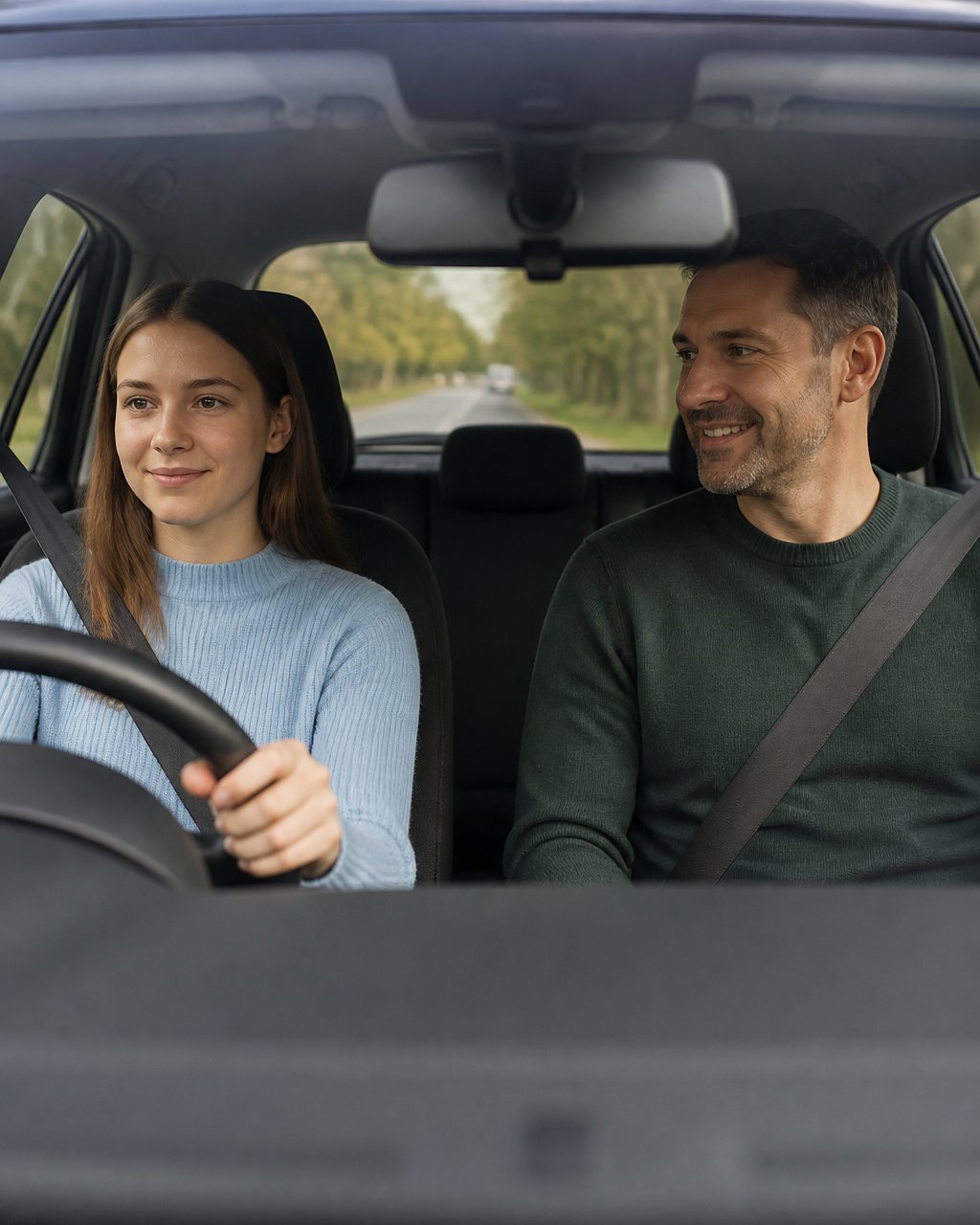
Here's what to look for in an instructor:
Patience is non-negotiable. Ask potential instructors: "How do you respond when a student is nervous or makes mistakes?" Listen for phrases like "I slow down," "I explain why," and "we take breaks." Red flags: "You just need to relax" or "most people get over this quickly." Those responses dismiss your experience.
They explain the why, not just the what. A good instructor tells you why you're doing each exercise.
They track progress together. Ask: "How will we measure if I'm improving?" The answer should include specific skills and milestones, not just "you'll feel better." Progress that's visible is progress you believe in.
They adapt to your pace. Some learners need five practice sessions on quiet roads. Others need ten. A good instructor adjusts the plan based on your actual progress, not a fixed timeline.
They have experience with nervous drivers. Ask directly: "How many nervous or anxious drivers have you taught?" Ask for examples of how they've helped someone build confidence. Experience matters here.
At Precision School of Driving, we specialise in supporting anxious and nervous drivers. Our instructors are trained to recognise when a learner is overwhelmed and to adjust the lesson in real time.
Driving lessons for adults with anxiety: A tailored approach
Adults learning to drive for the first time face different pressures than teenagers. You might feel embarrassed about starting late. You might have higher expectations of yourself. You might be juggling work and family while trying to learn.
Returning drivers face their own challenges. If you've been away from driving for years, the roads might feel completely different. Traffic seems faster. Vehicles seem bigger. Your anxiety isn't irrational, the environment has genuinely changed.
A tailored approach recognises these realities. It doesn't treat all learners the same.
For adults new to driving, a good lesson plan includes:
- Confidence-building on basics first. Vehicle controls, smooth acceleration, gentle braking. Master these before facing traffic.
- Real-world practice early. You're not learning for a test, you're learning to drive in your actual life. Practice the routes you'll actually use.
- Flexible scheduling. Work hours are real. Evening and weekend lessons should be available without excuses.
For returning drivers, the focus shifts:
- Refresher on rules and road changes. Speed limits, new road signs, updated road rules. These have evolved.
- Rebuilding muscle memory. Your body remembers more than you think, but it needs practice to reactivate.
- Addressing specific fears. Maybe you're anxious about motorways, or roundabouts, or driving in the dark. Target these directly rather than hoping they'll improve on their own.
Both groups benefit from lessons that acknowledge their anxiety without treating it as a character flaw. Anxiety is information. It tells you where you need more practice, more explanation, or more time.
Building confidence between lessons: Practice and progress tracking
What happens between lessons matters as much as the lessons themselves. That's where real learning happens.
Structured practice between lessons accelerates progress. But practice without a plan can reinforce bad habits or trigger anxiety.
Create a practice plan with your instructor. Before each lesson ends, agree on what you'll practice before the next one. Write it down.
Track what you do. Keep a simple log:
| Date | Route | Duration | What went well | What was hard |
|---|---|---|---|---|
| Oct 5 | Quiet streets | 20 min | Smooth turns | Parking |
| Oct 7 | Local roads | 25 min | Confidence | Heavy traffic |
| Oct 9 | Quiet streets | 20 min | Parking improved | Reversing |
This log shows progress that you might otherwise miss. When anxiety tells you "you're not getting better," the log proves it wrong.
Celebrate small wins. You parallel parked without hitting the kerb. You navigated a busy intersection. You drove for 30 minutes without your hands shaking. These are wins. Mark them. Notice them. Your brain needs this feedback.
Know when to push and when to pause. If you're making progress, increase difficulty slightly. If you're repeating the same mistake, go back to basics with your instructor. Progress isn't always linear.
The Australian Psychological Society recognises that consistent, structured practice with feedback is essential for managing anxiety-related learning.
What to expect in your first lesson and beyond
Your first lesson sets the tone. If it goes well, you'll feel ready for the next one. If it's overwhelming, anxiety can spike.
Before your first lesson:
- Arrive 10-15 minutes early. This gives you time to settle, meet your instructor, and ask questions without rushing.
- Bring your learner's permit and any medical information relevant to your anxiety (if you have a diagnosis).
- Ask your instructor: "What will we do today?" Knowing the plan reduces uncertainty.
During your first lesson:
- You'll start in a quiet area, usually a car park or residential street.
- The instructor will explain controls and basic handling.
- You'll do short driving segments, maybe 10-15 minutes of actual driving.
- The instructor will watch and give feedback.
- You won't be pushed into heavy traffic on day one. If an instructor does this, that's a red flag.
What you'll feel:
- Hyper-awareness. Everything feels significant. This is normal.
- Fatigue. Driving while anxious is exhausting. You might feel tired after 20 minutes of driving.
- Relief when it's over. And often, surprise that it went better than expected.
After your first lesson:
- You'll debrief with your instructor. They'll explain what went well and what to practice.
- You might feel emotional, nervous energy releasing. That's okay.
- You'll have homework: specific practice between lessons.
Lessons 2-10:
- Difficulty increases gradually. Busier roads, more complex situations, longer drives.
- Your anxiety will fluctuate. Some lessons feel easier than others. This is normal.
- You'll start to notice your skills improving. Smoother turns. Quicker decisions. Better spatial awareness.
Months 2-3:
- You're driving in varied conditions: different times of day, different weather, different traffic levels.
- Your anxiety has usually decreased significantly, though it may not be gone entirely.
- You're preparing for your driving test, but more importantly, you're preparing for real-world driving.
The timeline varies. Some nervous drivers progress quickly. Others take longer. Both are fine. Progress matters more than speed.
Ask your instructor for feedback in writing after the first three lessons. Seeing specific improvements documented, "smoother steering," "better lane positioning," "calmer under pressure", builds confidence faster than just hearing it.
Nervousness behind the wheel is treatable. It responds well to the right instruction, structured practice, and consistent support. At Precision School of Driving, we know that patience, clear teaching, and personalised lessons transform fear into confidence.
If you're a nervous driver, the first step is choosing an instructor who understands anxiety and knows how to build confidence gradually. Book a first lesson with us, and let's start building your confidence on the road. We offer flexible scheduling to fit your life, and our instructors specialise in supporting learners who need extra patience and structure.
Frequently Asked Questions
Is it normal to be nervous during driving lessons?
Yes, nervousness is extremely common for learner drivers. Anxiety about driving lessons often stems from fear of the unknown, concerns about making mistakes, or previous negative experiences. A patient driving instructor understands this and creates a calm environment where you can learn at your own pace. Recognising your nervousness is the first step, it shows self-awareness and helps your instructor tailor support to your needs.
How many driving lessons does it take to feel confident?
Confidence develops differently for each person. Some learners feel ready after 20-30 hours of structured lessons, whilst others need 50+ hours, especially if they're returning to driving after a long break or managing significant anxiety. The key is consistent, progressive practice on increasingly challenging roads and traffic conditions. Your instructor should help you measure progress through specific milestones, like managing busy intersections or motorway driving, rather than just counting hours.
What should I tell my driving instructor if I feel anxious?
Be honest about your anxiety from the start. Tell your instructor which situations trigger nervousness, heavy traffic, tight parking, specific road types, and how it affects you physically (shaking hands, racing heart, freezing). A supportive instructor will adjust the lesson plan, perhaps starting on quieter roads or breaking challenging skills into smaller steps. Open communication helps your instructor provide the right level of challenge and reassurance for your individual learning pace.
Can I build confidence between driving lessons?
Absolutely. Between lessons, practise on quiet, familiar roads with a trusted passenger. Set small, achievable goals, like driving to the local shops or navigating a familiar route at different times of day. Keep a progress journal noting which situations felt easier and which still challenge you. This structured practice reinforces skills learned in lessons and helps you recognise improvement, which directly builds driving confidence over time.