 How-to
How Do Refresher Driving Lessons Help Older Drivers?
Last Updated: November 10, 2026
Quick Summary
Refresher driving lessons help older drivers check and rebuild their skills with a calm, patient instructor after a long break, a health change, or a new car. The lessons focus on each learner's habits and goals, which can build confidence and help them stay safe and independent on the road.
- Refresher lessons look at actual driving habits rather than chronological age.
- Common focus areas include intersections, parking, night driving and highway merging.
- A refresher lesson builds skill, while a formal assessment measures a defined standard.
- Raise driving with your doctor at every medication review, especially for vision or physical conditions.
- Licensing requirements for older drivers differ between states and territories, so check locally.
Table of Contents
- Benefits of Refresher Driving Lessons for Confidence and Independence
- When to Consider a Driving Assessment for Older Drivers
- Older Driver Refresher Lessons: What Happens in a Session
- How Many Refresher Driving Lessons Are Usually Needed?
- Medical Conditions, Vehicle Changes and Other Barriers to Address
- Booking Your First Refresher Lesson With Precision School of Driving
- Frequently Asked Questions
Most older drivers have been behind the wheel for decades, yet a long gap in driving, a change in health, or a new car can quietly erode confidence. Our step-by-step guide to returning to driving after a long break walks you through getting back behind the wheel.
A 2024 review found some evidence that simulator, on-road and cognitive training can benefit driving performance, though few eligible studies were included (State of Knowledge on Older Drivers).
Chronological age alone is not a reliable basis for judging driving ability. Some drivers in their seventies handle traffic with ease, while others struggle earlier. Refresher lessons look at actual driving habits rather than a birthday.
Interview research into older adults' driving found that many drivers work hard to keep their driving safe and confident over time (Toward Safe and Confident Silver Drivers: Interview Study). That motivation is a strong starting point for a refresher course.
Benefits of Refresher Driving Lessons for Confidence and Independence
The main benefit of refresher lessons is confidence. A driver who knows how the car responds, and how they respond in traffic, is far less likely to avoid driving altogether.
Here is what most refresher learners work on:
- Reacting to changing traffic at intersections and roundabouts
- Parking and reversing with a clear view of blind spots
- Night driving and glare management
- Adjusting mirrors, seating and controls for comfort and visibility
- Merging and highway speeds at a pace that feels manageable
A common mistake is assuming that a licence held for decades means nothing needs checking. Road rules, vehicle technology and traffic patterns change, and a short session often reveals a habit worth correcting.
A systematic review also found that tailored driver-training programmes addressing an older driver's individual needs may improve road safety (Older Adults' Motivations for Participating in a "Tune-Up"). Tailoring is the key word here, and it is why each lesson starts with the learner's goals.
When to Consider a Driving Assessment for Older Drivers
A refresher lesson and a formal driving assessment serve different purposes, and confusing the two is one of the most common reasons older drivers delay getting help. A lesson builds skill and confidence in a low-pressure setting. An assessment measures whether a driver meets a defined standard, usually because a doctor, a family member or a licensing authority has raised a concern.
Consider an assessment if you notice any of the following:
- Near misses or minor collisions you cannot fully explain
- Getting lost on routes you have driven for years
- Difficulty judging gaps at intersections or when merging
- Friends or family expressing concern about your driving
- A new diagnosis, a change in medication, or a recent hospital stay
- A letter from the licensing authority asking for a medical review or driving test
What an assessment actually involves
The outcome is normally a written report with one of three recommendations: fit to continue driving, fit to continue with conditions (for example, daylight only, a restricted radius, or an automatic-transmission vehicle), or not fit to drive. That report can be shared with your doctor and, where required, with the licensing authority.
How the licensing pathway works
Each state and territory runs its own older-driver framework, so the process is not uniform. Check the current requirements with your state or territory licensing authority before booking anything.
Watch out: licensing requirements differ between states and territories, so confirm the current rule with your own licensing authority before you book anything.
Assessment versus lesson: which comes first
If a licensing authority has already asked for a test, book the assessment first and use lessons to prepare for it. If no one has raised a concern and you simply feel less sharp than you used to, start with a refresher lesson.
Older Driver Refresher Lessons: What Happens in a Session
Each session is shaped around the learner. There is no fixed script, and nothing is rushed.
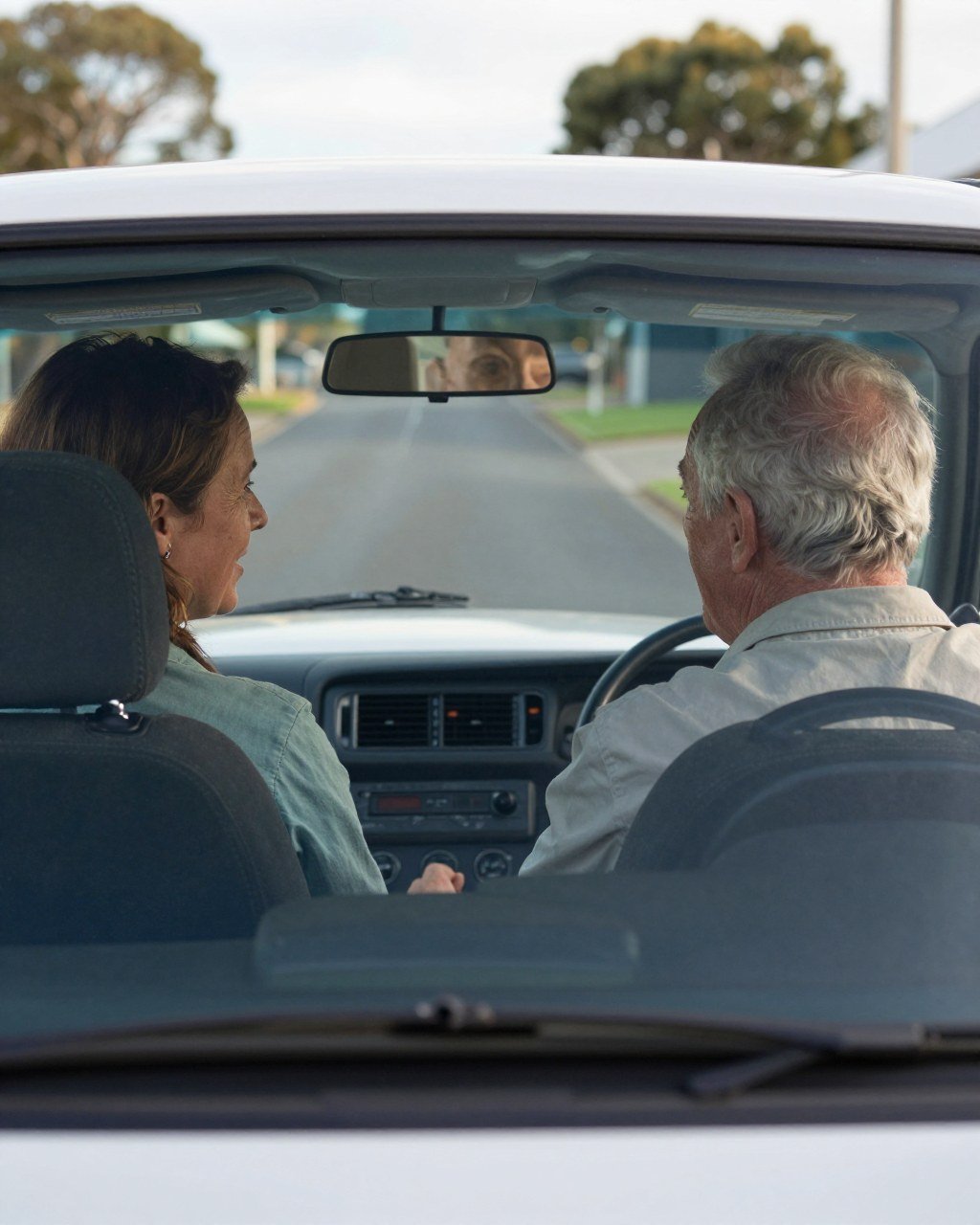
Each session is shaped around the learner's goals, with feedback given clearly and without pressure.
Watch out: if a learner feels rushed into busy roads too early, confidence can drop, so tell your instructor if the pace is too fast.
How Many Refresher Driving Lessons Are Usually Needed?
There is no single answer. The number of lessons depends on how long you have been away from driving, your health, and how much practice you already get. Many learners book a short block and then review progress before deciding on more.
Lessons can be booked around your routine, and pricing depends on the lesson length and programme chosen, so check the Precision School of Driving website for current prices or to request a quote.
Medical Conditions, Vehicle Changes and Other Barriers to Address
Some barriers to safe driving are easy to overlook because they creep in slowly. Vision changes, reduced hearing, arthritis affecting neck or hand movement, neuropathy in the feet, and some medications can all affect the skills driving depends on. If fear or anxiety behind the wheel is holding you back, this structured plan for overcoming driving anxiety sets out the steps to work through. So can the car itself: a newer vehicle with a touchscreen, electronic parking brake and driver-assist systems can be genuinely disorienting for someone who learned on analogue controls.
Medical conditions: what to raise with your doctor
The conditions that most often affect driving fall into a few groups. Vision conditions, cataracts, glaucoma, macular degeneration, and diabetic eye disease, affect gap judgment and night driving. Cognitive changes affect route planning, divided attention and hazard anticipation. Physical conditions such as arthritis, stroke recovery, Parkinson's disease and sleep apnoea affect reaction time, neck rotation and sustained alertness. Medication matters too: sedatives, some antidepressants, strong pain relief and diabetes medication that risks hypoglycaemia can all impair driving even when the condition itself is stable.
A useful rule is to raise driving explicitly at every medication review rather than waiting for a doctor to ask. Doctors are often reluctant to open the conversation, and drivers are often reluctant to volunteer it, so the topic can go unmentioned for years. If a condition is part of the picture, speak with your doctor about what is safe for you before booking lessons, and ask whether a medical report or an occupational therapy assessment is appropriate.
Vehicle technology: using the car's safety features deliberately
This is the area most older-driver guides skip, and it is where a refresher lesson can pay for itself fastest. Modern safety features are not just conveniences, they compensate for exactly the changes that come with age.
- Blind-spot monitoring covers the shoulder-check gap that stiff necks make difficult. It is an aid, not a replacement: the light warns you, but you still need to know what to do when it comes on.
- Autonomous emergency braking and forward-collision warning add a second set of eyes for the moments when reaction time is slower than it used to be.
- Lane-keeping assist helps on long highway stretches where fatigue and micro-drift are a risk, but it can fight a driver who is used to correcting manually, so it needs to be understood before it is relied on.
- Reversing cameras and parking sensors reduce the low-speed carpark incidents that are among the most common collisions for mature drivers.
- Adaptive cruise control reduces the constant throttle-and-brake workload on longer trips, which matters for drivers with arthritis or fatigue.
Watch out: driver-assist features can create a false sense of security, and some systems disengage silently in rain or low light, know the conditions in which yours stops working before you depend on it.
Psychological barriers and the family conversation
Psychological barriers matter as much as physical ones. Post-accident nerves, fear of highway traffic, and the sense that any change to driving is the first step toward losing independence can hold an otherwise capable driver back. Anxiety after a minor incident is common and usually responds well to graded exposure, short, low-traffic drives that rebuild confidence before returning to busier roads.
Family members often want to help but do not know how. A common pattern that works better than a confrontation is to frame the conversation around a shared goal, staying independent for longer, rather than around stopping.
If you are the driver, you can start the conversation yourself by telling family you are booking a lesson to sharpen up. It reframes the issue as maintenance rather than decline, and it keeps the decision in your hands.
The article points to several barriers that can quietly affect older drivers, grouped by type below.
| Barrier | Examples given | Suggested action |
|---|---|---|
| Vision changes | Cataracts, glaucoma, macular degeneration | Raise with doctor before booking lessons |
| Cognitive changes | Route planning, divided attention | Discuss with doctor |
| Physical conditions | Arthritis, stroke recovery, Parkinson's | Check safety with doctor |
| Medication | Sedatives, strong pain relief | Raise at every medication review |
| Vehicle technology | Touchscreens, electronic parking brake | Learn controls in a lesson |
| Blind-spot monitoring | Covers shoulder-check gap | Still check manually when light warns |
| Psychological barriers | Post-accident nerves, fear of highways | Use short, low-traffic drives to rebuild confidence |
Booking Your First Refresher Lesson With Precision School of Driving
Contact us to talk through your experience, your goals and your availability. We work with learners returning to driving after a long break as well as those who want to feel more at ease on the road.
If you are not sure where to begin, book a refresher lesson and we will help you decide what suits you best. For a clearer picture of what to expect on test day, read how to pass your driving test. Mature learners can also explore lessons designed for older adults building confidence.
Staying behind the wheel safely is a goal worth working towards, and the right refresher course can make that practical. Precision School of Driving provides calm, personalised lessons for learners who want to feel confident again, with flexible scheduling to fit around your week. Book your refresher lesson today and take the next step towards independent driving.
Frequently Asked Questions
Can older drivers take refresher driving lessons?
Yes. Refresher lessons are designed for experienced drivers who want to rebuild skills, update their knowledge of current road rules or feel more comfortable behind the wheel after a break. Lessons can be tailored to the driver's goals. Precision School of Driving offers calm, personalised lessons for mature learners, and pricing depends on the lesson length and program chosen, so check the Precision School of Driving website or request a quote for current prices.
How many refresher driving lessons might an older driver need?
The number varies with each driver. Someone returning after a short break may only need a few sessions to regain confidence, while a driver who has been off the road for many years, or who is managing a medical condition, may need more. Lessons can be spaced out over weeks so the driver has time to practise between sessions.
Can an older driver use lessons to prepare for a driving assessment?
Yes. Refresher lessons are a practical way to prepare for a driving assessment because they let the driver practise the manoeuvres and road situations the assessor is likely to observe. Check with your state or territory transport authority for the exact requirements that apply to your licence, as these vary across Australia.
What should you look for in a driving instructor for an older driver?
Look for an instructor who is patient, explains things clearly and adjusts the pace to suit the driver. Ask whether they have experience with anxious or returning drivers, and whether they can tailor lessons to specific concerns such as vision, reaction time or driving at night. A good instructor will focus on building confidence rather than criticising mistakes, and will keep the vehicle well maintained and safe for lessons.