 How-to
Why Driving Lessons Feel Like Wasted Money
Quick Summary
Driving lessons often feel wasted when there is no clear plan, progress is not tracked, or the instructor-learner fit is poor. A skills checklist, specific feedback questions and a written plan for each lesson show whether the money is working.
- Ask your instructor for their checklist or lesson plan and track each skill yourself.
- Ask specific feedback questions, such as which of your habits is most likely to fail the test.
- Keep a one-page lesson log noting one thing that improved and one thing still hard.
- Watch for stalled instruction, such as repeated demonstrations or familiar routes driven most of the lesson.
- Review your lesson budget and readiness plan every three or four weeks against your log.
Table of Contents
- Why Driving Lessons Can Feel Like a Waste of Money
- How to Tell Whether Your Lessons Are Actually Progressing
- How Many Driving Lessons Do I Need?
- How to Get the Most Out of Driving Lessons
- When Your Driving Instructor Is Not Helping
- Building a Personalised Lesson Budget and Readiness Plan
- Booking Your Next Lesson With Precision School of Driving
- Frequently Asked Questions
Why Driving Lessons Can Feel Like a Waste of Money
Last Updated: November 1, 2026
Driving lessons are one of the bigger costs a learner or parent will face, and it's easy to feel the money isn't going anywhere.
Driving lessons are best understood as a shared situation between the learner, the instructor and the car.
Some people also question the cost itself. Some argue that ride-sharing and future driverless cars make learning to drive a pointless expense.
The hidden costs behind every lesson
The price on the invoice is only part of the story. Instructors carry running costs, and a lesson pays for more than an hour of talking and driving.
Knowing this helps you judge value. Ask what each lesson covers and whether the time is used well. A cheaper lesson that wastes half its hour may cost more in the end than a fair-priced one that builds real skill.
How to Tell Whether Your Lessons Are Actually Progressing
Progress is easier to measure than most people think, but it needs more than a feeling at the end of the hour. A good lesson should leave the learner able to do something new, or do something better than before, and both the learner and the instructor should be able to name it. If you cannot name a single skill that improved in the last few lessons, that is the signal to change something.
Use a simple skills checklist
Ask your instructor for their checklist or lesson plan, then track it yourself. A workable log has three columns: the skill, the date it was introduced, and the date you last practised it independently. Skills that keep appearing in the 'introduced' column without moving to 'practised independently' are the ones eating your money.
If you are still on car control after many hours, or you have never been asked to drive independently, ask why.
Ask better feedback questions
'How did I go?' invites a polite answer. Specific questions get specific answers:
- What did I do well today that I could not do three lessons ago?
- What is the next skill on my plan, and when will we start it?
- Which of my habits is most likely to fail me on the test?
- What should I practise between lessons, and with whom?
- Am I test-ready, and if not, what are the three biggest gaps?
Write the answers down. A pattern of vague or shifting answers is itself information.
Spot the signs of stalled instruction
Lessons can feel busy without being productive. Warning signs include:
- The instructor repeats the same demonstration without changing the approach or explaining why.
- You spend most of the lesson driving familiar routes you already handle well.
- Feedback is general ('you need to be more confident') rather than tied to a specific behaviour.
- There is no written or verbal plan for the next lesson.
- You are never given a chance to make decisions independently.
None of these automatically mean the instructor is bad, some learners need repetition, but they are worth raising directly. A short, calm conversation at the start of a lesson is often enough to reset the relationship.
If the answers stay vague week after week, raise it directly with your instructor. A clear plan should be part of every lesson, and a learner who can see the plan is far less likely to feel the money is disappearing.
The article suggests a simple way to check whether lessons are working, using the skills checklist and the signs of stalled instruction.
| Warning sign | What it may mean | What to do |
|---|---|---|
| Same demonstration repeated without change | Approach is not adapting | Ask why the approach is unchanged |
| Familiar routes driven most of the lesson | No new skills being built | Ask for the next skill on your plan |
| General feedback, such as 'be more confident' | Feedback is not specific | Ask for a specific behaviour to fix |
| No plan for the next lesson | Lessons lack direction | Request a clear plan before the next booking |
| No chance to make decisions independently | Learner is not building independence | Ask for supervised decision-making practice |
How Many Driving Lessons Do I Need?
There is no single number that suits everyone. Some learners pick things up quickly, while others need more time to feel safe on busy roads.
Steady, regular lessons generally work better than long gaps, as frequent contact keeps skills fresh. Our guide to whether private driving lessons are worth it for adults looks at how lesson volume and private instruction compare.
How to Get the Most Out of Driving Lessons
Getting value from each lesson comes down to preparation and focus. Small changes can make a big difference to what you take away.
- Arrive rested and ready, so you can concentrate. Our customised driving lessons for beginners guide shows how lessons can be tailored to your own needs.
- Write down questions during the week and bring them to the lesson.
- Tell your instructor what worries you most, so they can plan around it.
- Practise between lessons with a supervising driver where it's allowed.
- Review what you learned at the end of each lesson.
If your learning style needs slower explanations or a different order of topics, say so. Clear communication saves time and money.
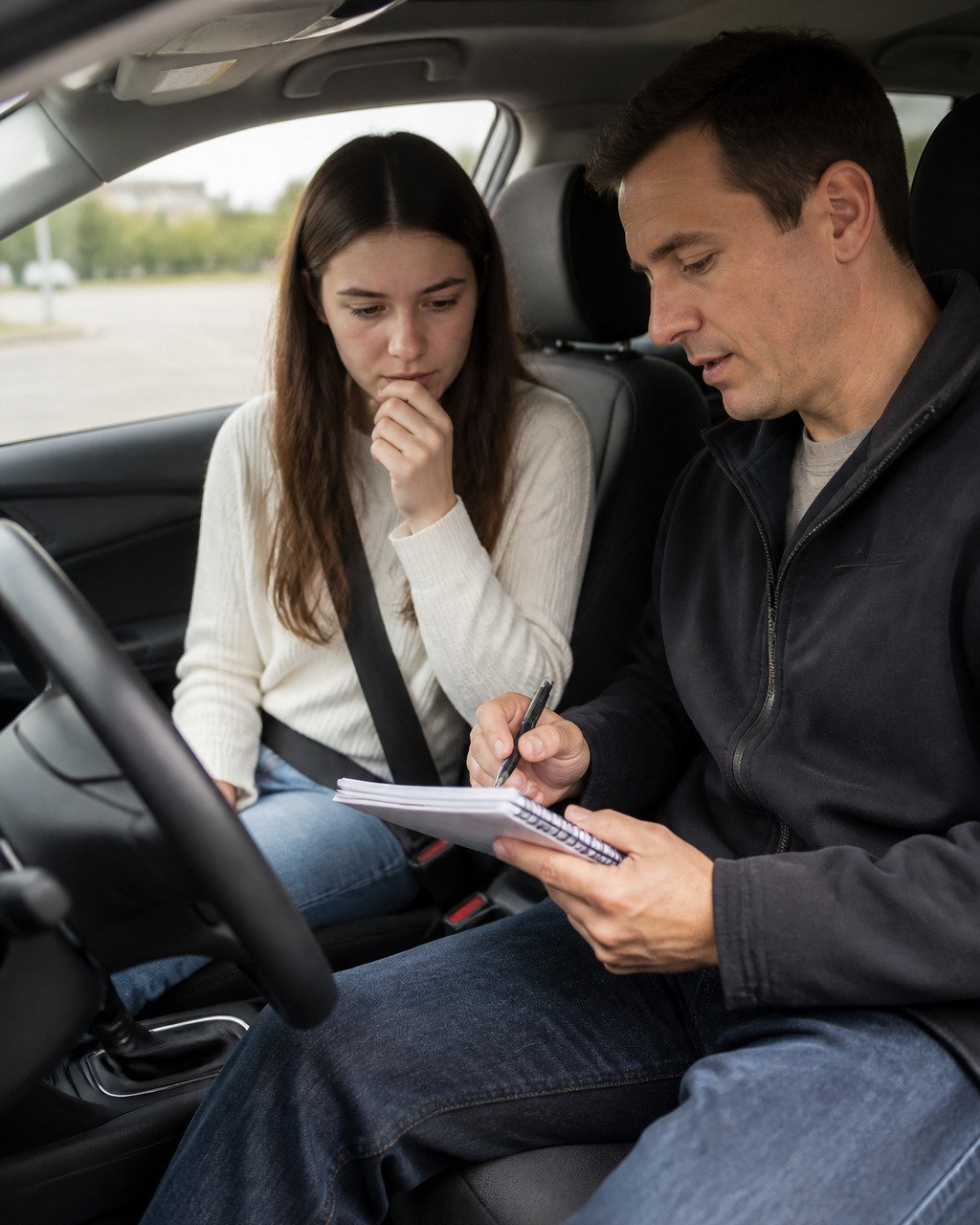
!A nervous young learner driver sitting behind the wheel of a parked car with a calm, patient instructor beside her, reviewing a notepad together
When Your Driving Instructor Is Not Helping
Sometimes the problem is the fit between learner and instructor, not the learner's ability. Teaching style, pace and communication all matter. A learner who feels rushed, criticised or ignored will struggle to learn, no matter how many hours they book.
Signs that the match may not be working include lessons that leave you more anxious than before, feedback that feels unclear, or a lack of any clear progress plan. If you want to find a better fit, our guide to choosing a supportive driving school explains what to look for.
Building a Personalised Lesson Budget and Readiness Plan
A simple plan keeps spending under control and keeps learning on track, but a plan built only on a general average will mislead you. The number of lessons a learner needs varies widely with prior experience, how much supervised practice they can get between lessons, and how close they are to test standard. A personalised plan starts from where you actually are, not from an average.
Step 1: Estimate your remaining lessons from current skill level
Use your skills checklist to sort each area into one of three buckets:
- Secure: you can do it consistently without prompting.
- Developing: you can do it with reminders or in quiet conditions.
- Not started: you have not covered it, or you cannot yet attempt it.
Most learners need the most paid hours in the 'developing' bucket, because that is where repetition and feedback pay off. Skills in 'not started' usually need at least an introduction lesson plus practice. If most of your checklist is still 'not started' after several lessons, the issue may be lesson structure rather than your ability.
Step 2: Factor in practice availability
Supervised practice with a parent or nominated supervisor can add useful hours between paid lessons. The mix matters. Learners who can practise two or three times between lessons typically need fewer paid hours to reach the same standard, because they are consolidating skills rather than relearning them. If you have no practice vehicle or no supervising driver, tell your instructor so they can plan the lessons around your situation.
Step 3: Work out a realistic weekly or monthly spend
Decide what you can afford per week or per month without borrowing, then divide by the lesson rate to see how many lessons that buys. Compare that with your remaining-lessons estimate. If the two do not meet, you have three honest options:
- Extend the timeline rather than cramming lessons closer together.
- Increase supervised practice to reduce the number of paid hours needed.
- Change the lesson format, for example, shorter lessons focused on one skill, or a double lesson less often.
Step 4: Set a test-readiness checkpoint, not just a test date
A target test date is useful only if it is tied to readiness. Our complete guide to passing your driving test sets out what the test requires, so you can plan how many lessons to book. Agree a checkpoint with your instructor, for example, 'we will review readiness after the next six lessons', and use the checklist to judge it.
Step 5: Review every few weeks
A budget and readiness plan is not a contract. Review it every three or four weeks against your lesson log. If progress has stalled, adjust the number of lessons, the mix of practice time, or the instructor. If progress is faster than expected, you can bring the test date forward and stop paying for hours you no longer need.
Booking Your Next Lesson With Precision School of Driving
If lessons have felt like wasted money, the fix is usually a clearer plan, better preparation and the right instructor. At Precision School of Driving, we offer calm, patient, personalised lessons, with flexible scheduling and a focus on safety. Our instructors help anxious or nervous drivers, and we support teens and adults returning after a long break.
Ready to get more from every lesson? Book Now and start building real driving skills with a clear plan.
Frequently Asked Questions
Why do driving lessons feel like a waste of money?
Lessons often feel wasted when each hour is spent on the same mistakes, when the learner is too anxious to absorb feedback, or when there is no clear goal for the session. Paid time without structure, specific objectives or a review at the end of each lesson makes progress hard to see. Asking your instructor to set one or two targets per lesson, and reviewing them afterwards, usually shows whether the money is working for you.
How can I tell if I am making progress in driving lessons?
Look for concrete changes rather than general feelings. Progress shows up when you need fewer prompts for mirror checks, when you handle intersections and roundabouts with less hesitation, and when your instructor gives less verbal correction over several lessons. Keep a simple log of each lesson's focus area and rate how it went. If the same skill stays flagged for weeks, that is a sign to change approach or instructor.
How many driving lessons do I need before passing?
There is no fixed number. Many learners need more lessons than they expect, particularly if they are anxious, learning later in life, or have had a long break from driving. The number depends on prior experience, how often you practise between lessons, and how quickly you build confidence in traffic. Discuss a realistic estimate with your instructor early on, then check your progress against it every few lessons.
What should I do if my driving instructor is not helping me improve?
Start by telling your instructor exactly what is not working, such as pace, feedback style or the way the lesson is structured. A good instructor will adjust. If the problem continues after a few lessons, ask for a different instructor. Changing teachers is a normal part of finding the right fit and can make a real difference to how quickly you improve, especially if you are feeling anxious behind the wheel.